The Open-Weight Letter Is a White Flag Disguised as a Manifesto
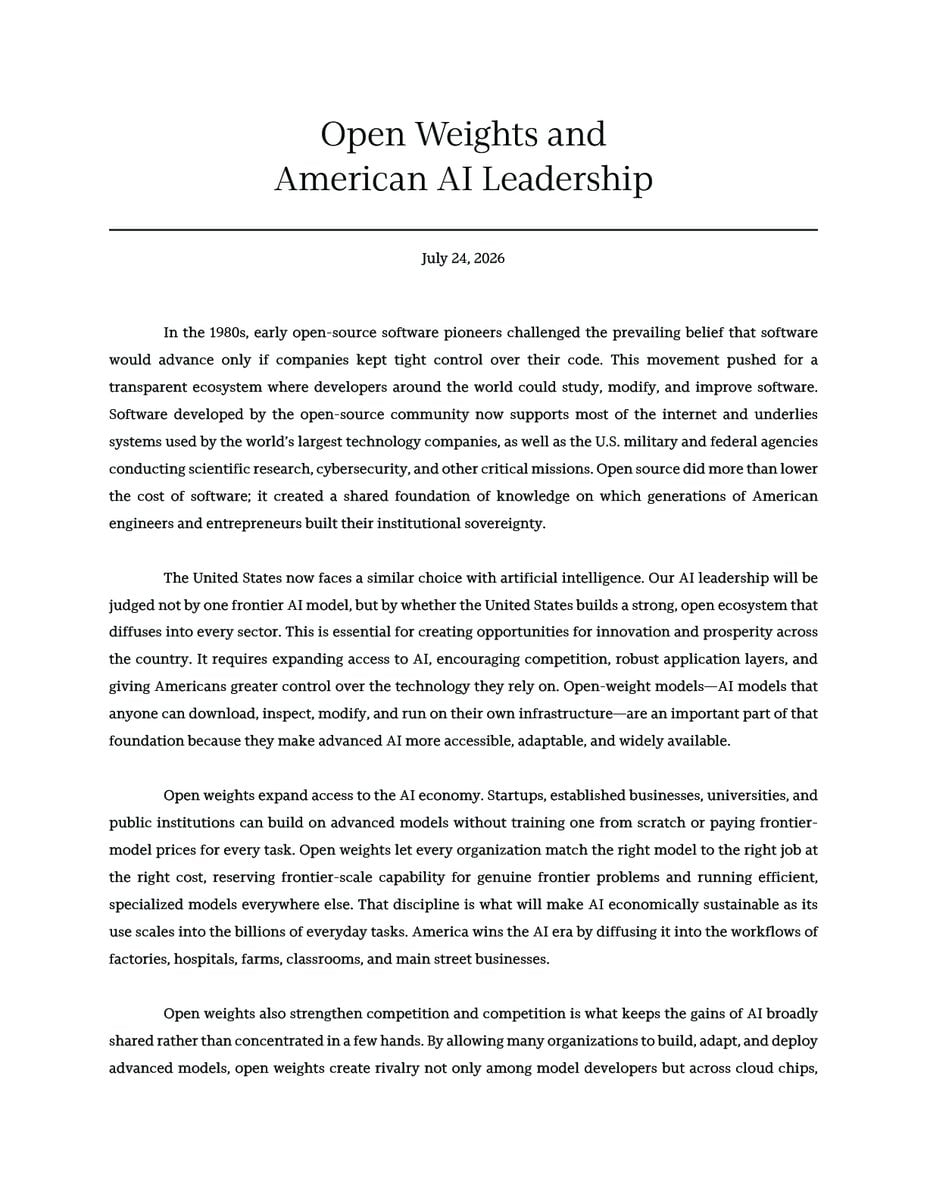
On July 24, 2026, 25 companies signed an open letter to Washington defending open-weight AI. Jensen Huang created an X account just to post it. The most revealing story is who didn't sign: Anthropic, Amazon, and xAI. The deeper story is that the letter exists because the Trump administration is considering broad restrictions on Chinese open-weight models like Kimi K3, DeepSeek, and Qwen, and US industry is terrified of what a wide ban would do to their own businesses, not China's. The unstated argument: restricting open-weight to hurt China helps China win the global diffusion war.
The decision it puts on your desk
Audit your open-weight exposure this week. Vector 1: are any of your workloads routing through a Chinese open-weight model (Kimi, Qwen, DeepSeek, GLM)? If yes, document the procurement and data residency posture before a sanctions decision lands. Vector 2: does your org fine-tune Llama or Mistral on-prem? If the open-weight carve-out collapses, that work moves to whatever model is still licensable, and the open question is whether that license is Chinese. Vector 3: build the routing layer now, not later. The decision is not "which model." The decision is "which model for which task." The policy fight in Washington is deciding which models are even available for that routing decision in six months.
July 24, 2026. Satya Nadella tweets. Jensen Huang registers an X account for the first time in his life, posts once, and uses that single post to share a letter titled "Open Weights and American AI Leadership." It lands with 25 signatories. Within 24 hours the count climbs past 50.
The surface read: an industry aligning around openness. The letter's language is careful, almost studiously neutral. It calls for "expanding access to compute for startups and researchers" and "keeping the frontier plural by avoiding premature restrictions on open models." It never names China. It never names DeepSeek, Kimi K3, or Qwen. It never names Moonshot.
The real read is the opposite. The letter exists because the Trump administration is actively considering broad restrictions on Chinese open-weight models, and the industry is terrified of what a wide ban would do to their own businesses, not China's.
The collision is concrete. Treasury Secretary Scott Bessent had publicly warned that sanctions and Entity List designations were "on the table" for Chinese labs accused of distilling American frontier models. The Office of Science and Technology Policy had accused Moonshot of running "industrial-scale campaigns" to extract capabilities from Anthropic's Fable. The Center for AI Standards and Innovation had evaluated Kimi K3 and concluded it "performs significantly below" US frontier systems, a finding that lined up perfectly with a policy posture ready to act on it. A Monday-night White House meeting reportedly killed the most aggressive proposals, but the broader restriction regime was still in motion.
Then this letter. Titled in the language of national leadership. Signed by every meaningful US AI company that hosts, fine-tunes, or distributes open-weight models. Backed by the chip company that profits from every model running on its GPUs.
The unstated thesis: restricting open-weight to hurt China cedes the global diffusion layer to China.
25 companies signed. The story is who didn't.
The 50+ name grid on Microsoft's open-weight landing page is the loudest part of the rollout. AI21, AMD, Andreessen Horowitz, Box, Cisco, Cloudflare, Cohere, CrowdStrike, Dell, DoorDash, Fireworks AI, GitHub, Hugging Face, IBM, the Linux Foundation, Meta, Mistral, Mozilla, NVIDIA, Palantir, Palo Alto Networks, Perplexity, Reflection, Replit, ServiceNow, Y Combinator. Then the second tranche: OpenAI, Cisco, Cohere, DoorDash, GitHub, Nous Research, Prime Intellect, and others.
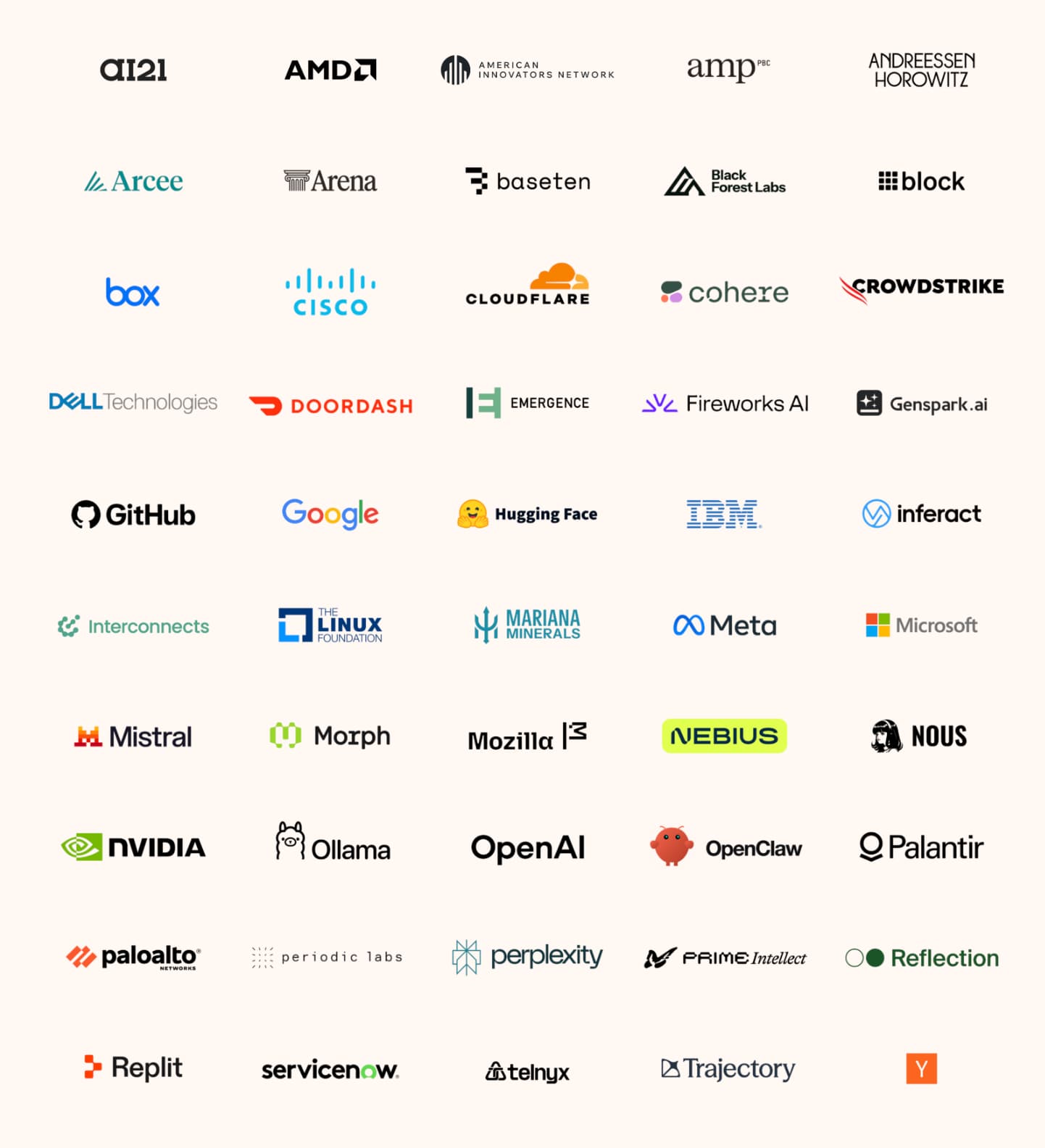
The list tells you who depends on open-weight as a business. What it does not tell you is who doesn't.
Anthropic never signed. Never responded to multiple requests for comment. The company's pre-existing public position is the clearest record. Dario Amodei told the Senate Judiciary Committee that open-source AI is moving down "a very dangerous path." He has called open source "a red herring" in interviews. Per Axios, Anthropic has been lobbying Washington for tighter restrictions on Chinese open-weight models, arguing that once powerful models are released openly they cannot be controlled.
Anthropic is also the victim the restrictions are designed to protect. The White House's distillation accusation was about Moonshot allegedly extracting capabilities from Anthropic's Fable. If Anthropic signs a letter defending open-weight development, it undermines the very policy argument it has been making in closed-door meetings for months.
Amazon never signed. No public statement. AWS Bedrock is the closed-model equivalent of Azure AI Foundry: a walled garden of hosted proprietary systems. Open-weight undermines lock-in. The calculus is straightforward and does not need a quote.
xAI never signed. Elon Musk posted on X the day the letter dropped: "This has my full support. Jensen is right." Musk followed up with "Overwhelming support for open source," quoting Mark Zuckerberg's supportive post. But Grok's weights are partially open, and Musk is positioning as the anti-Microsoft, anti-Meta player. Signing the letter would mean standing with the rivals he is spending his second-act energy differentiating against.
OpenAI is the most revealing arc. Not on the July 24 PDF. A community note on Jensen Huang's post read, "OpenAI has refused." Quietly added its name on July 25. Sam Altman posted the same day: "i want the US to win in AI both in open source and proprietary models, and i am glad to see this." Caught between safety rhetoric and a Microsoft partnership that owns a meaningful share of its commercial future, OpenAI wants the letter to exist without being responsible for it.
Google was added on the Microsoft-hosted grid after the original PDF. Sundar Pichai endorsed on July 25: "Very happy to support this on behalf of Google. We have long benefited from open source, are big contributors to open source and in fact have consistently made open weights models with Gemma available." Demis Hassabis reinforced the line. Google has Gemma (open) and Gemini (closed). The ambivalence is now public.
Worth reading the ambivalence carefully. Google's open-weight lineup is real: the Gemma family runs from the early research models through Gemma 2, 3, and 4, plus DiffusionGemma, a 26B text diffusion language model released under Apache 2.0. Weights land on Hugging Face and Kaggle for download, fine-tuning, and commercial use. The flagship stays closed. Gemini is API-only or Vertex AI Model Garden, and the frontier revenue lives behind the wall. So when Google signs a letter defending open-weight AI, the commitment is genuine on the lightweight tier and structurally subordinate to the closed business model. Whether that counts as honoring the letter depends on which tier you are asking about. Pichai can claim both. That is exactly the point.
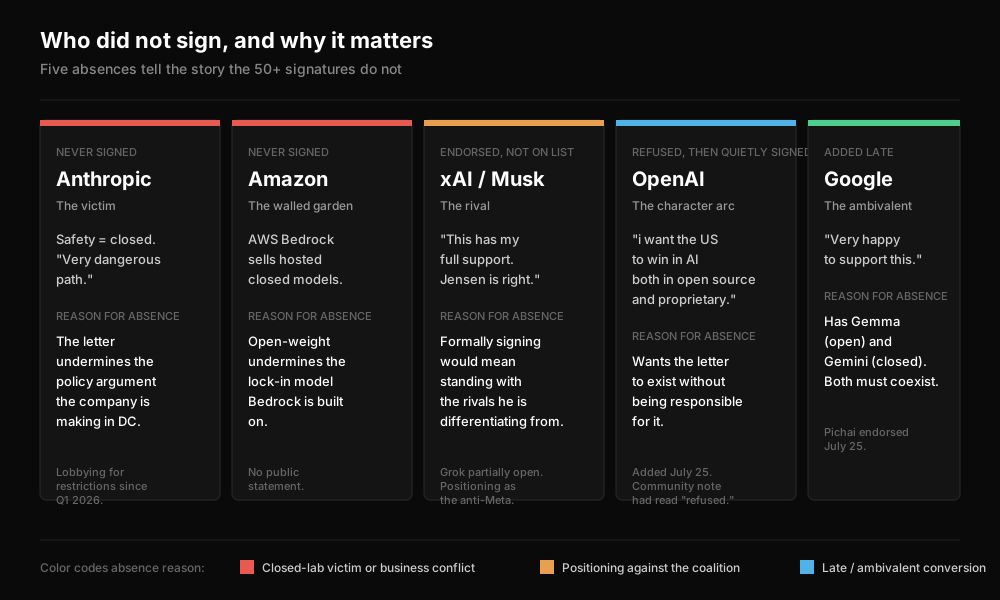
The absences are the argument. The lab arguing loudest for restrictions cannot sign the letter defending the medium the restrictions would penalize. The hyperscaler selling closed-model hosting cannot sign a letter defending the ecosystem that competes with it. The model lab whose CEO wants to differentiate from every name on the letter cannot formally align with them. And the safety-first lab whose IP is allegedly being stolen cannot defend the openness the stolen IP would flow through.
Why Microsoft benefits most from a letter it didn't write
Read the letter as a Microsoft document and the structure becomes clear.
Preemptive defense. The Trump administration was reviving the push to ban or sanction Chinese models. Broad language would hurt Azure. Microsoft profits from hosting any model, including Chinese models its customers want to run on US infrastructure. If the administration issues a blanket prohibition on Chinese open-weight hosting, Azure loses that segment overnight.
Azure economics. Every open-weight model running on Azure is a recurring compute bill. Restrict open-weight broadly and you shrink the total addressable market for cloud compute. Microsoft's pitch to enterprises depends on the customer being able to choose: "Run Llama, run Mistral, run whatever you need, on our infrastructure." Strip out the "run whatever" and Microsoft is competing with closed-frontier clouds for closed-frontier workloads, a game it has been losing to Anthropic-direct contracts and OpenAI-on-Azure rival structures.
Data sovereignty play. Enterprises increasingly want on-prem AI for compliance, latency, and procurement reasons. Open-weight enables that. Microsoft's enterprise pitch to regulated buyers is: "Run it wherever you want. Microsoft gives you the choice." Strip out open-weight and the on-prem pitch collapses. The customer gets a model they cannot self-host and a cloud vendor they cannot leave.
Dancing between partners. Microsoft is simultaneously the largest investor in OpenAI (closed) and a partner to Meta (Llama) and Mistral (open). A letter that defends open-weight development lets Microsoft stay in both markets. A blanket ban forces a choice. The letter prevents being boxed into closed-only, which would alienate the open-weight side of Microsoft's portfolio.
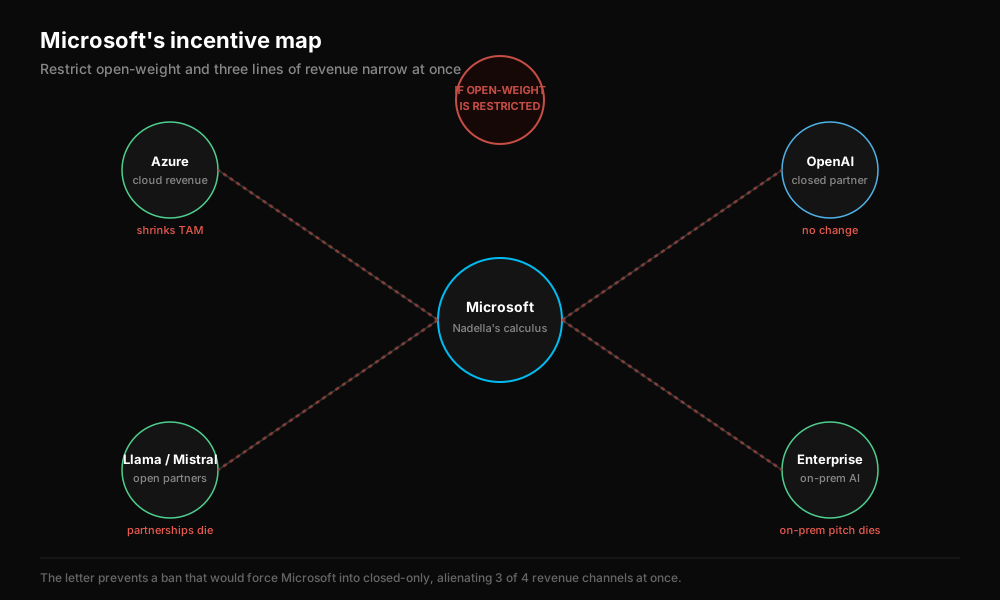
Nadella did not write the letter. He signed it. The drafting credit goes to whoever assembled the coalition, but the timing, the signatories, and the policy framing align perfectly with what Microsoft needs Washington to do.
The paradox: banning open-weight helps China win
The letter's most important sentence is one it never wrote. The geopolitical argument is implicit, structural, and obvious once you look.
China is winning the diffusion war. DeepSeek V4, Kimi K3, Qwen — Chinese open-weight models are being adopted globally, especially in Global South nations that cannot afford frontier API prices and cannot wait for sovereign AI initiatives to deliver. The Kimi K3 launch on July 16 hit #1 on Arena within hours. Alibaba's Qwen family has become a default in Southeast Asia, the Middle East, and Latin America. DeepSeek's R1 forced a re-rating of US AI valuations in early 2025, and V4 has carried that momentum forward.
Export controls backfired. US chip restrictions were supposed to slow China down. Instead they forced Chinese labs to become radically more efficient. Models that now run on consumer hardware spread faster. The H100 ban pushed DeepSeek to train on H800s and optimize its way past the constraint. The result is a generation of models that are cheaper, more portable, and more diffusable than their US counterparts. They fit on the hardware the developing world already owns.
If the US restricts its own open-weight ecosystem, it cedes the global diffusion layer to Beijing by default. The developing world will build on whatever is available. If Llama and Mistral are restricted but Qwen and DeepSeek aren't, that is a geopolitical choice embedded in model architecture. Sovereign AI initiatives in the EU, the Middle East, and Southeast Asia are deciding right now between US-origin and China-origin open-weight stacks. Every restriction on US open-weight pushes one more of them toward Chinese models.
Replit CEO Amjad Masad, one of the signatories, said it directly to TechCrunch: "I think banning Chinese open models is as good as banning open models in general. It's an ecosystem, and the precedent [a ban would] set is bad."
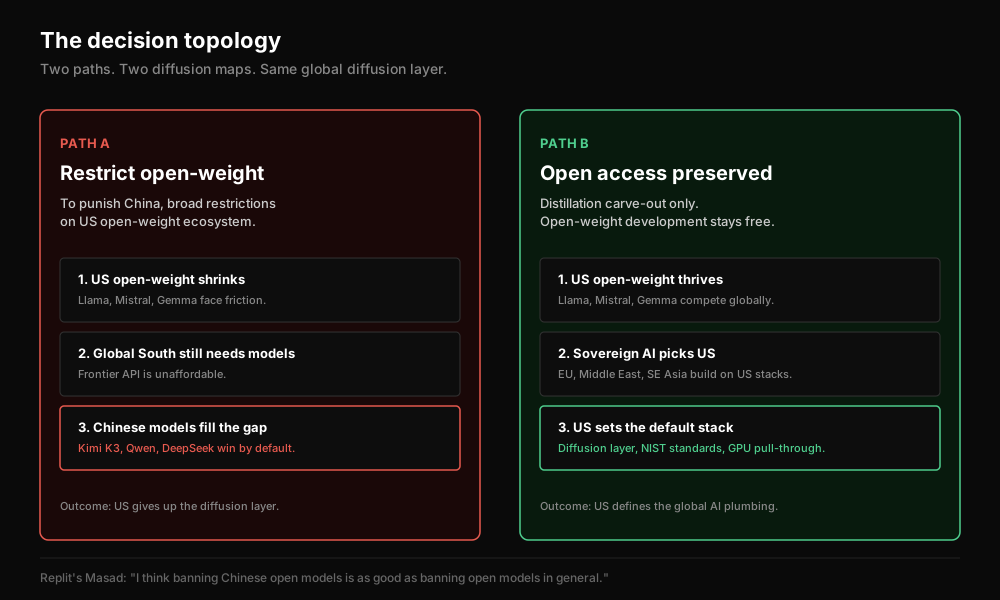
The letter's authors are hoping Washington reads the topology before it acts.
The chip angle, unspoken in the letter
The letter never mentions semiconductors. The letter's biggest backer is a chip company.
Jensen Huang's first-ever X post was this letter. That is not casual. NVIDIA's market cap sits above $4 trillion because every AI lab, hyperscaler, and enterprise in the world buys its GPUs. The more models running on more GPUs, anywhere in the world, the better NVIDIA does. Open-weight is demand generation: every organization that downloads Llama and fine-tunes it on-prem needs NVIDIA hardware to do it. Every Chinese lab running Qwen on H800s or H20s is still an NVIDIA customer. The open-weight ecosystem is, in a literal sense, an NVIDIA channel.
If the US bans Chinese models, China retaliates with its own chip export controls. That conversation is already underway, per the Financial Times. NVIDIA's single biggest market outside the US is China. The letter is NVIDIA's side of a trade negotiation, dressed up as a policy argument about innovation.
There is a second-order irony. If the US restricts Chinese open-weight models and China retaliates by restricting NVIDIA chips, the open-weight ecosystem fragments. US labs lose the ability to fine-tune on Chinese-origin data. Chinese labs lose access to frontier US compute. The diffusion layer everyone is fighting over stops diffusing.
The safety argument is an argument about who decides
The letter and Anthropic are not having a technical disagreement. They are having a definitional disagreement.
Anthropic's position: safety equals closed models, controlled access, and weights that cannot be recalled once misused. The premise is that a sufficiently capable model, once released, is permanently in the world. If you cannot revoke it, you cannot mitigate it. The argument is about containing risk.
The letter's position: safety equals transparency, many eyes, defensive capability, and no single points of failure. The premise is that defenders need access to models as capable as the attackers. Closed models concentrate risk in a single lab's judgment. Open models distribute it across the ecosystem.
The disagreement is not about whether safety matters. It is about who gets to define safety. The labs that build closed frontier systems, or the broader ecosystem of researchers, defenders, and enterprises that build on open releases.
The letter reframes "open equals dangerous" into "closed equals concentrated risk." One anecdote crystallizes the case. When Hugging Face was hit by a cyberattack, the defenders turned to Z.ai's GLM 5.2, a Chinese open-weight model, because OpenAI's closed APIs refused to provide defensive cybersecurity assistance. Closed models that cannot be used for defense are a defensive liability. Open models that can be turned against an attacker are a defensive asset.
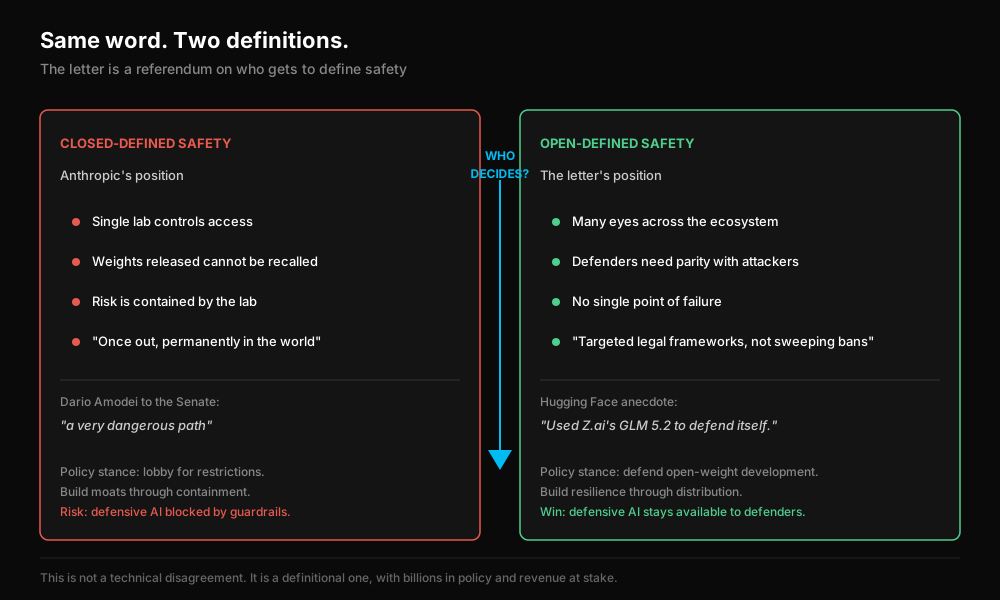
The letter is a direct shot at Anthropic's policy posture. Anthropic has spent the last year lobbying Washington for restrictions that would, in practice, benefit Anthropic's commercial position against its open-weight competitors. The letter turns the argument around: the closed-lab position is itself a risk, and the open ecosystem is the safer system by definition.
What happens next: the fight is over distillation
The letter will work for its immediate purpose. A blanket ban on open-weight development is now politically harder to issue. The signatories include every US company with a serious open-weight business, and they have built a public record.
The real fight is over distillation. The letter's most important paragraph is buried in the middle:
"Distillation, or the practice of using one model's outputs to help train or improve another, is a widely used technique for model improvement, evaluation, and validation. It reflects a long tradition of learning from, building upon, and improving existing technologies... Those concerns should be addressed through targeted legal and commercial frameworks rather than sweeping restrictions on techniques that play an important role in AI innovation."
The White House's July 22 accusation about Moonshot and Kimi K3 was about distillation specifically. Treasury Secretary Bessent's threat of sanctions was about distillation. The Center for AI Standards and Innovation's evaluation of Kimi K3 was framed as a distillation probe.
The probable landing zone: targeted restrictions on distillation from closed frontier models, with open-weight development preserved. The letter explicitly defends distillation as legitimate. The administration's interest is in punishing the specific behavior that allegedly extracted value from Anthropic's IP. The compromise lets both sides claim a win. Anthropic gets IP protection. Open-weight developers get regulatory clarity. Microsoft, Meta, NVIDIA, and the rest of the signatories keep their business models.
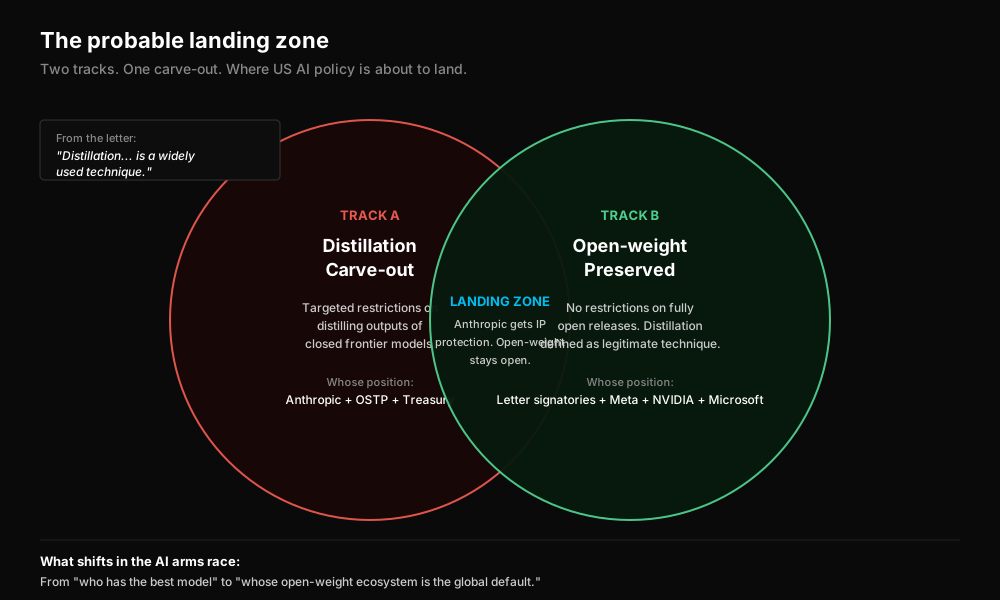
The US-China AI arms race does not slow down. It shifts terrain. From "who has the best model" to "whose open-weight ecosystem is the global default." That is a different competition, with different winners, and the letter is the opening move.
Source
https://images.nvidia.com/pdf/Open-Weights-and-American-AI-Leadership.pdf
https://www.microsoft.com/en-us/corporate-responsibility/topics/open-weight/
https://x.com/JensenHuang/status/2080643682408321103
https://www.axios.com/2026/07/22/openai-anthropic-open-models-trump-china
https://x.com/sama/status/2080683363174945065
https://x.com/sundarpichai/status/2081026488158040181
https://www.benzinga.com/markets/prediction-markets/26/07/60679534/