Anthropic asks every hire to accept watching their stock go to zero. At a $2 trillion IPO, that is a hard sell.
At $65B in revenue, Anthropic asks every applicant the same thing. Would you back the company if the stock went to zero?
The decision it puts on your desk
If you hold private AI equity, decide this week whether to exit before the IPO pop or hold through the first two quarters of public trading. SpaceX's day-one buyers are still down, and Anthropic carries a heavier cost structure. If you are building on Claude, lock in your contract terms before the roadshow hardens pricing. Public disclosure will force unit economics to tighten. Your current rate may not survive it.
Anthropic asks every job candidate the same question. Would you support the company shutting down its work for safety, even if the stock went to zero?
One candidate answered honestly, Axios reported. No. They would not be happy. They wanted to balance doing the most good with building a business that survives. The interviewer did not seem to like that answer.
That is a striking thing to select against.
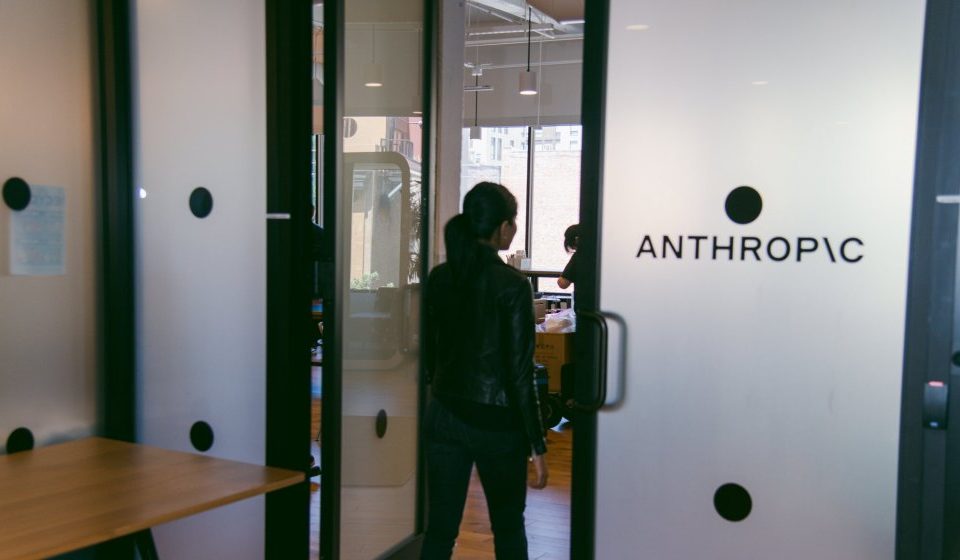
The culture interview has existed since Anthropic's early days, co-founder Daniela Amodei said. But the stock-to-zero framing is newer. The timing matters.
Anthropic raised $65 billion in a Series H round on May 28, 2026, at a $965 billion post-money valuation. Amazon, Micron, Samsung, and SK hynix joined as strategic infrastructure partners. When your memory suppliers are also your shareholders, the line between customer, vendor, and investor gets blurry.
The company's annualized run rate hit $65 billion by the end of July. That is up from roughly $9 billion at the end of 2025. Preliminary second-quarter revenue exceeded $11.5 billion, up from $787 million a year earlier, Bloomberg reported.
The other number in the filing: a net loss of nearly $42 billion in 2025. That is roughly five times the $8.3 billion loss a year earlier. Anthropic reached positive adjusted operating income in the second quarter. That is an early signal that unit economics could improve. The gap between growth and profitability is what every public-market investor will have to price.
What SpaceX already taught the market
Investors expect a listing as soon as October at a valuation north of $2 trillion. That would make it the largest initial public offering in history. It would surpass SpaceX's own record debut in June.
SpaceX listed on June 12 at $135 a share, raising roughly $75 billion. The stock opened at $150. It closed its first day at $160.95. It traded as high as $225.64.
Then it fell to an intraday low of $104.83 on August 5. That is a 50% drop from the peak.
Anyone who bought at the open on day one is still down roughly 10%. Anyone who bought at the peak has lost 40% of their money in eight weeks.
The safety culture is the pitch and the risk
Anthropic's initial public offering prospectus will list negative sentiment toward AI and data centers as a key risk factor, CNBC reported. Seven in 10 Americans opposed AI data center construction in their area, according to a Gallup survey published in May.
The Trump administration designated Anthropic a national security supply-chain risk. It forced a recall of its Mythos AI model under export controls. The fight with the Pentagon centered on whether Claude could be used for fully autonomous weapons or mass surveillance of Americans.
The dispute put tens of billions of dollars in government contracts at risk. That is real money. The culture interview looks less strange in that context, though not less severe.
The competitor math
OpenAI's annualized run rate topped $40 billion. That is roughly double the $20 billion-plus it ended 2025 with, according to Bloomberg. OpenAI has also filed confidential paperwork to go public. Current reporting suggests Anthropic gets there first.
Being first matters. It lets Anthropic set the benchmark the entire AI sector gets measured against.
Chinese labs are cheaper. Kimi K3 and Qwen3.8 have closed much of the gap that Anthropic's frontier lead once commanded. Enterprise revenue tends to be stickier than consumer subscriptions. Anthropic's brand around safety plays directly to cautious corporate procurement departments.
But if rival models become good enough and cheaper, premium pricing erodes fast.
The unresolved thread: Anthropic's governance structure commits the board to weighing more than the share price. Public investors will decide whether that is a differentiator or a discount.