SpaceX closed its $60 billion Cursor deal, and the AI coding market just changed shape
SpaceX closed its $60 billion all-stock purchase of Anysphere, maker of the Cursor coding agent. The deal gives the tool the world's biggest compute supply and gives SpaceX a fast-growing software business.
The decision it puts on your desk
Re-check which models your coding tools use by end of August, because Cursor now has a reason to put Grok first and every rival is racing to match the price. If your team builds on Cursor, test Grok 4.6 against your own code now, and ask in writing whether model choice stays open. The next price war starts this quarter, and it decides the cost of building software for the rest of 2026.
SpaceX closed its $60 billion all-stock purchase of Anysphere, the company behind the Cursor coding agent, on Friday.
It is the largest deal in the history of AI coding tools. Cursor now runs on top of the world's biggest stock of GPUs, the special chips that run AI models. SpaceX gains a software business worth about 20% of its own revenue.
The purchase ends a four-month process. SpaceX offered the option in April: buy Anysphere outright for $60 billion, or pay $10 billion for a partnership. It chose the buy, announced the deal in June, and cleared the final regulatory steps this week.
I have watched this deal from both sides of the announcement. The all-stock structure is the quiet part that matters. SpaceX pays in its own public shares, which cost it very little in dilution.
Why Cursor sold
The short answer is compute.
Reuters reported that a lack of access to computing power had been holding Cursor back. Cursor trains its own models, but it cannot match the data centers of OpenAI or Anthropic.
"If you put these two together, I predict that this is going to move SpaceX, xAI and Cursor to the front of the coding leaderboard within 12 months," Jason Calacanis, host of the All-In podcast, said in April.
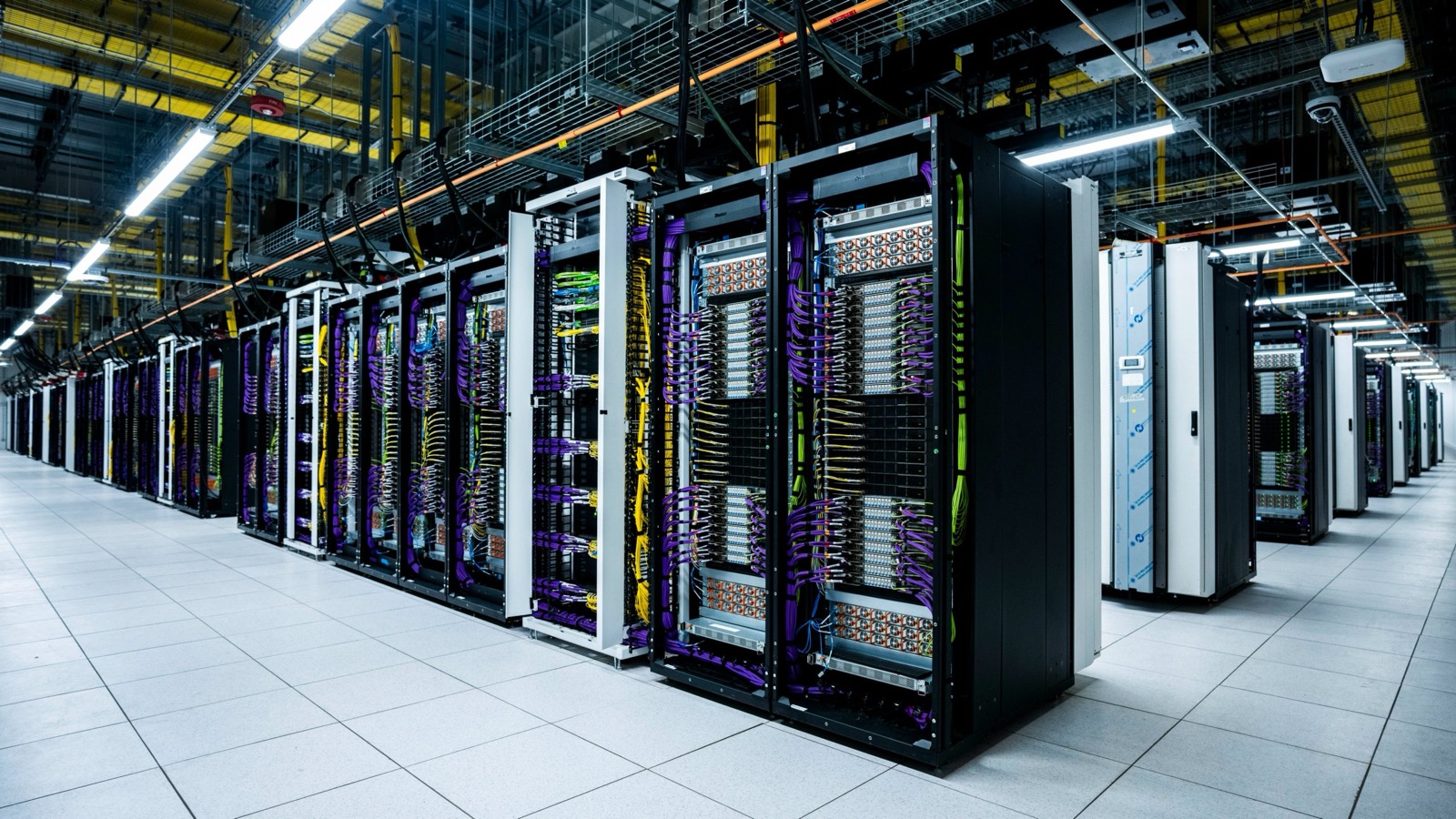
Colossus is the supercomputer built by xAI. It holds about 550,000 of those chips.
SpaceX absorbed xAI in February and renamed it SpaceXAI in July. Anysphere had been in talks for a funding round at a $50 billion valuation.
Selling at $60 billion in stock was the better exit. The seller side of this deal mostly disappears once the paperwork lands.
"One of the things that makes SpaceX so valuable is how valuable it is," billionaire investor Bill Ackman said in a post on X. "The Cursor acquisition costs materially less in dilution because of SpaceX's high valuation."
What each side gets
Cursor gets compute. "We will have access to the largest fleet of GPUs in the world, giving us the compute to build stronger models that are also more economical to run," the Cursor team said in its announcement.
Grok 4.6, released Wednesday, is the first look at that promise. It matches OpenAI's flagship on the Artificial Analysis Intelligence Index. It costs $2 per million input tokens and $6 per million output tokens. It launched inside Cursor with double usage for the first week.
SpaceX gets distribution and data. Cursor's developer base generates coding requests and design decisions, the raw material Grok needs to improve. "Cursor will help us move faster on the path to the world's most useful AI, starting with software engineering and expanding into knowledge work," SpaceXAI said in a post on X.
The numbers make the case. Cursor hit a $4 billion annual run rate in June, up from $3 billion in April, and Calacanis said the company expects to end 2026 at $6 billion.
SpaceX brought in $18.7 billion in revenue in 2025. Cursor is already about 21% of that.
Morgan Stanley's Adam Jonas frames Cursor as a wrapper today and a frontier model builder tomorrow. He holds a $300 base price target on SpaceX and a $600 bull case, and he says more than half of that base value rests on the AI business.
Who is forced to respond
Anthropic and OpenAI are the leaders in AI coding. Both now face a rival that owns cheaper compute, a bigger model family, and a captive interface. Claude Code alone passed a $47 billion annual run rate in May.
The pressure shows up in SpaceX's own contracts. SpaceX leases data center capacity to Anthropic and Google worth roughly $26 billion a year combined, with 90-day exit clauses.
"If usage of Grok and Cursor picks up enough it can go back to using their capacity internally," Gil Luria, an analyst at D.A. Davidson, said.
I think the bigger shift is structural. The winners in AI coding are being pulled into companies that own the model and the chips.
Cursor just joined that club. Google, Microsoft, and Amazon already run their own. The independent middle is shrinking.
What it means for teams
Calacanis called this the best acquisition since Instagram and YouTube. The comparison sets a brutal bar.
Cursor would need to grow eightfold to match Instagram's $32 billion in revenue. It would need fifteenfold to match YouTube's $60 billion.
Even at half that pace, the direction is clear: coding tools are becoming an extension of model companies.
For teams that build on Cursor, the practical question is model choice. The tool still supports many models, and SpaceXAI says the choice stays open.
I get the sense the default will drift toward Grok anyway. Every bundled product drifts toward its owner's stack.
That drift matters more than the price. I'd be surprised if a serious coding shop re-baselines its toolchain before testing Grok 4.6 on its own code.
The next price war starts this quarter.
Source
← Previous
Chinese AI labs train frontier models for millions and sell access for pennies
Next →
Groq raised $350M at a $3.5B valuation to complete its pivot from chipmaker to neocloud
The Morning Recap
We sift the day. You make the calls.
The decision on every story, in your inbox before your first call.