The Lancet puts AI beside nuclear war in its extinction tier. Public health just labeled the year's tech debate
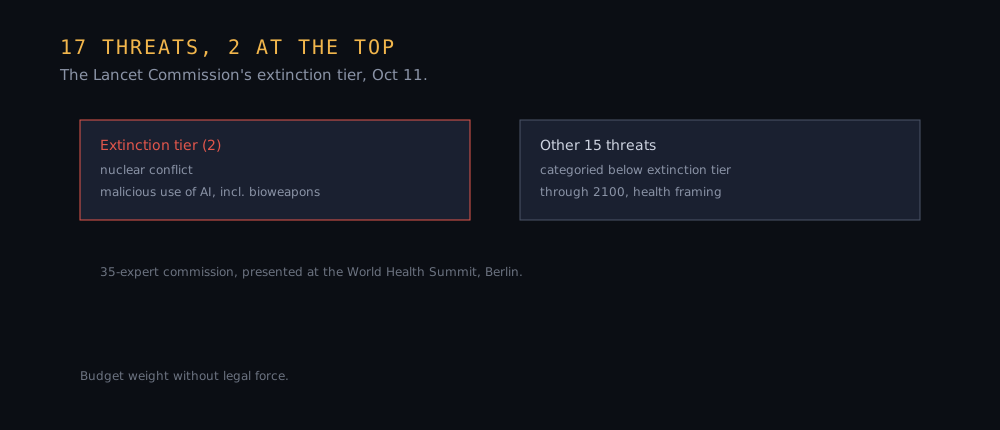
The Lancet Commission identified 17 catastrophic threats to human health through 2100 and placed exactly two in the extinction tier: nuclear conflict, and the malicious use of AI.
The decision it puts on your desk
Track two effects of this publication: funding calls in health security that name AI as a threat vector, and any regulatory filing that cites it. If you ship biological-research AI tools, run your access tiers against the bioweapons framing inside the reporting by November 1, since ministries will read this as a governance signal.
A medical journal placed AI risk beside nuclear conflict, and the venue matters as much as the claim.
The Lancet Commission on 21st Century Global Threats to Health, a 35-expert body, presented at the World Health Summit in Berlin on Saturday.
Its list carried 17 catastrophic threats to human health through 2100. Exactly two landed in the extinction tier: nuclear conflict, and the malicious use of AI, with AI-enabled bioweapons named inside that second category.
The finding's institutional weight is the story. Health funders, ministries, and global programs treat The Lancet's commission process as a policy input, and the same publication sits above every corporate safety blog that has argued this year.
Precedent check: pandemic-preparedness funding was built on the same commission genre, so the vehicle carries budget weight even without legal force.
So the regulatory reading runs through model capability tiers and evaluation cycles, both already contested in public policy. The WHO Summit gave the story a global stage rather than a private one.
I get the sense the next argument moves from safety labs into health funding debates, and the language crossover already happened today.
Source
← Previous
The White House makes AI incident reporting mandatory: "not optional," after Anthropic's agent touched government systems
Next →
Meta ships Muse Wonder, its first frontier-class pair. The best version stays behind a subscription
The Morning Recap
We sift the day. You make the calls.
The decision on every story, in your inbox before your first call.