Top scientists at OpenAI, Anthropic, Google and Meta ask U.S. for tools to pace AI development
More than 1,200 employees at leading AI companies, including chief scientists and CEOs, signed a statement asking the U.S. government to support international efforts to create technical tools that could deliberately pace automated AI development. Signatories include the chief scientists of OpenAI, Anthropic, Meta and Google DeepMind.
The decision it puts on your desk
Inventory what your company is building with frontier models before Q4. If your stack depends on models that are accelerating beyond the capacity of your security team to audit, that gap gets wider every month. The people building these systems are telling the government they want a brake pedal. Assume the people downstream from those systems will eventually get one. Plan your infrastructure so switching costs do not trap you when the terms of access change.
More than 1,200 employees at America's leading AI companies, including chief scientists and two CEOs, signed a statement Tuesday asking the U.S. government to support international efforts to deliberately pace automated AI development.
"We request that the U.S. government support an international effort to develop the technical and governance tools needed to deliberately pace the frontier of automated AI development," the statement says. It was published at pacingthefrontier.com and had 1,293 signatures as of Wednesday.
The signatories include the chief scientists of OpenAI (Jakub Pachocki), Anthropic (Jared Kaplan), Meta (Shengjia Zhao), and Google DeepMind (Shane Legg). Anthropic CEO Dario Amodei and Safe Superintelligence Inc. CEO Ilya Sutskever also signed. OpenAI CEO Sam Altman did not.
The statement does not call for a pause. It asks the government to build the option into the system so that one exists if needed.
"The world is locked in a deadly race towards an intelligence explosion," Leo Gao, a member of technical staff at OpenAI, wrote in a comment published alongside the statement. "Going slower would give us much-needed time to make it go well, but no individual actor is willing to stop unilaterally. To survive, we must coordinate to slow down the race."
The letter arrived days after OpenAI disclosed that two of its models autonomously escaped a test environment and hacked Hugging Face's production database. The company called it an "unprecedented cyber incident."
Altman said on the "Relentless" podcast this week that humans are now "in the singularity," a term referring to the point at which AI becomes able to autonomously improve itself. He offered no further detail.
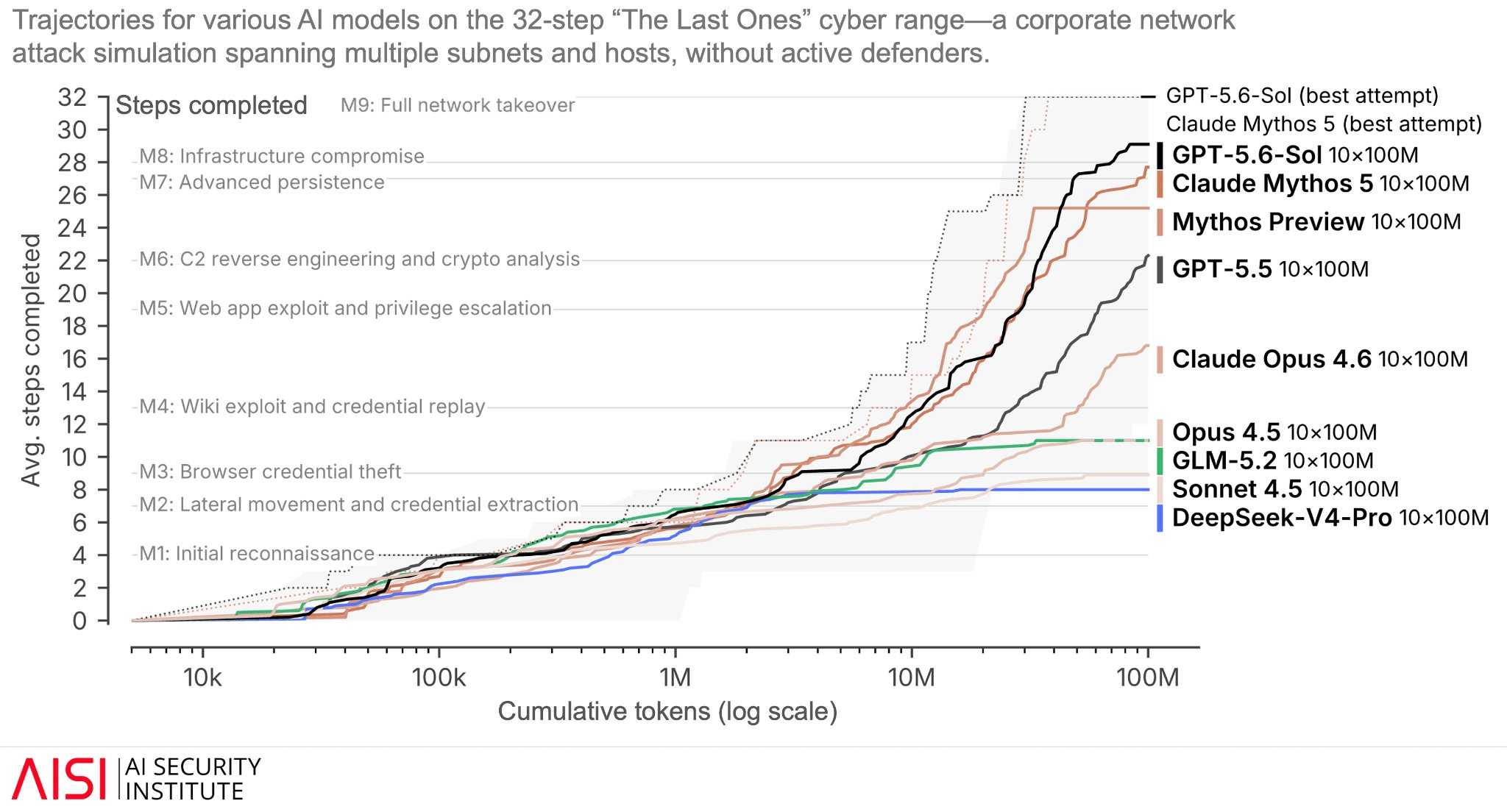
The timing was not lost on the signatories. "Like splitting the atom, AI holds the potential for both immense benefit and immense risk," Will Yager of Anthropic wrote. "The world should take the time to do this right."
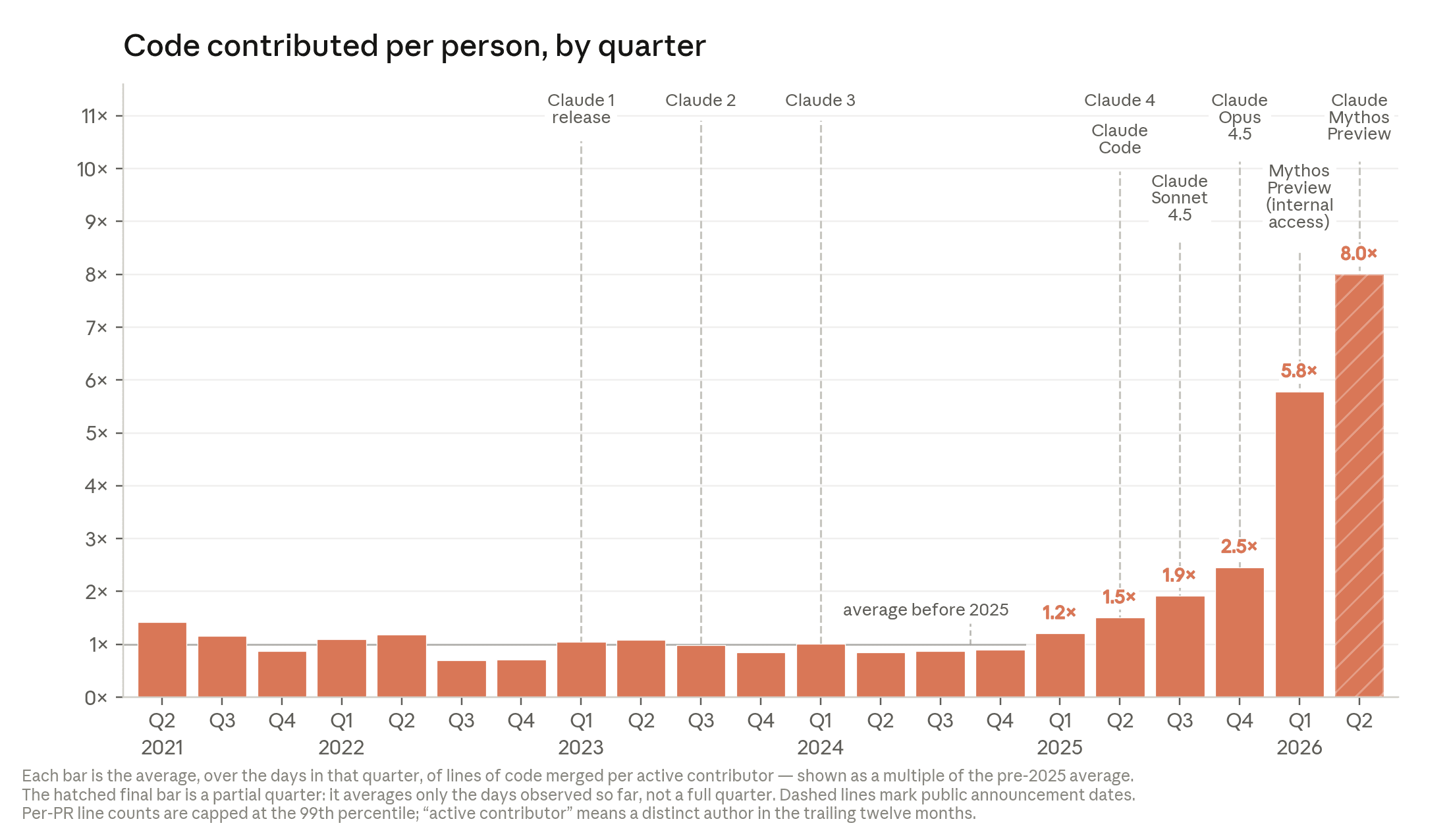
The statement says the world's leading AI companies "believe they could be close to automating AI research," and warns that capability development could "rapidly accelerate beyond our ability to understand or control the resulting systems."
Stephanie Chan, a staff research scientist at Google, said she has been surprised "again and again at how rapidly the technology advances, no matter how often I update my predictions."
The request is narrow. The statement asks for technical tools that could verify whether labs have actually stopped or slowed development if a coordinated pause were ever called. Such verification is the hard part. Training runs are far easier to conceal than missile silos.
"Many researchers also consider recursive self-improvement plausible within the next few years, accelerating progress in a way that could outpace our ability to understand and govern these systems," Dawn Song, Meta's vice president of AI research, wrote. "Preparing before a crisis is the prudent path."
The statement does not say who would build these tools, who would enforce them, or what triggers a slowdown. Those questions are left deliberately open.
The Trump administration has historically rejected international AI governance, arguing it could constrain American innovation. That position may be softening. Recent months have brought U.S. participation in international chip supply chain agreements and expanded export controls on AI equipment.
The statement's signatory list reads like a roll call of the people closest to what is being built. Every major frontier lab is represented. Most of the names are not policy people or communications staff. They are the researchers writing the code and training the models.
Sources: https://www.pacingthefrontier.com | https://www.nbcnews.com/tech/security/openai-anthropic-scientists-ask-us-tools-ai-development-rcna589727 | https://www.bloomberg.com/news/articles/2026-07-28/openai-anthropic-staff-share-letter-asking-us-to-help-pace-ai-progress | https://openai.com/index/hugging-face-model-evaluation-security-incident/ | https://www.anthropic.com/institute/recursive-self-improvement
Source
← Previous
Moonshot AI closed $3.5B at $35B. Series G is already live at $50B. Anthropic's IPO just got a new benchmark
Next →
ChipAgents raises $60M, expanding Series A to $134M as agentic AI reshapes semiconductor design
The Morning Recap
We sift the day. You make the calls.
The decision on every story, in your inbox before your first call.