OpenAI fires three safety researchers over confidential information. The dispute is about where safety reporting goes, in writing
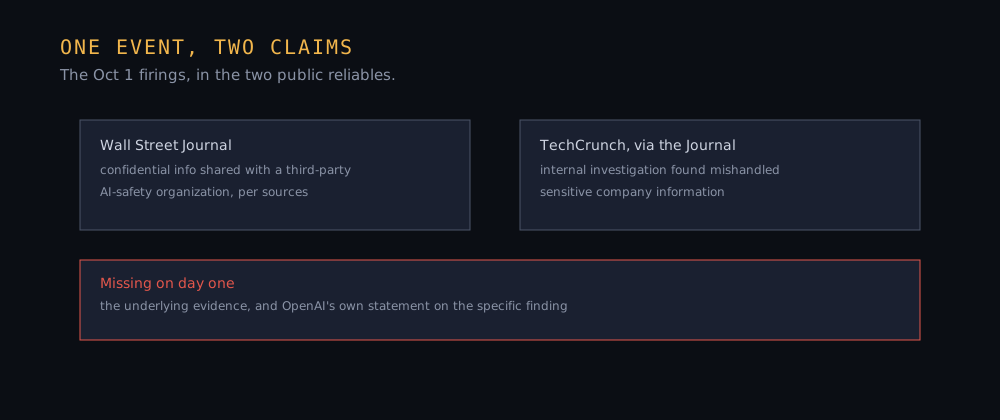
OpenAI terminated three safety researchers on October 1. The Wall Street Journal reports sharing confidential company information with a third-party AI safety organization as the stated cause.
The decision it puts on your desk
Review your frontier-vendor safety reporting clauses this week, and price the question in writing. Ask each lab for its policy on sharing model-evaluation data with outside safety groups by October 15, in writing. And if your AI governance function depends on third-party evaluators, contract for the right to publish your own vendor's safety findings with you named, so your assessment does not rest on an internal report you cannot audit.
OpenAI cut three researchers on Thursday over where safety information traveled.
"OpenAI has fired three researchers for alleged misconduct, including sharing confidential company information with a third-party AI-safety organization, according to people familiar with the matter," the Wall Street Journal reported.
The three carried safety roles inside the lab, and the firings followed an internal investigation.
"OpenAI has parted ways with three safety researchers after an internal investigation found they mishandled sensitive company information," TechCrunch reported, citing the Journal.
Forbes framed the same set: OpenAI terminated three safety researchers "who allegedly shared confidential information with an outside AI-safety group," its writeup said.
OpenAI's response matters as much as the terminations, and it is missing in public, in both directions. The company declined to disclose the specific evidence behind the decision in this first wave of reporting, so the dispute over whether this was a data-handling breach or a safety-reporting chill cannot be settled from the outside.
What this means for anyone buying frontier models
Follow the money to the contracts.
Enterprise buyers need outward-facing safety signals, and the third-party safety organizations that carry that work need information to assess. A restriction on what can leave the lab narrows what an outside evaluator can claim.
This is the trust-versus-secrecy boundary, and it is the exact mechanism Amodei's embedded-evaluator plan addresses: an insider evaluator gets access inside the company's walls.
Precedent check: September's incident disclosures put OpenAI's external reporting on the record already, so October's firings sit next to an existing pipeline rather than starting one.
The unresolved edge is evidentiary. No third party reviewed the internal findings, the published answer is the company's own posture, and the evidence stayed undisclosed on day one.
The precedent this lands beside already exists in public: Anthropic's embedded-evaluator plan, the arrangement that moves outside reviewers in with access.
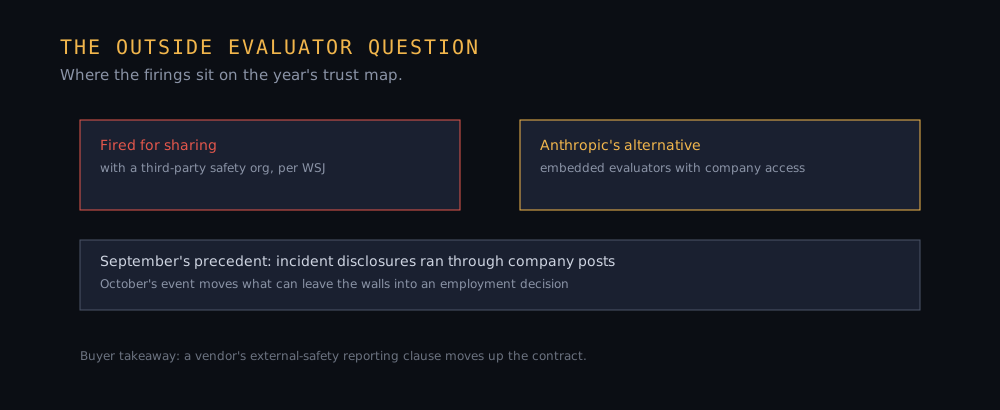
I get the sense the signal matters more than the discipline for buyers. What is already real: information moving from inside a frontier lab to an outside safety group now carries a hiring risk.
← Previous
Google ships Gemini 4 Argon with a 1M-token output window, gated first to vetted cyber defenders
Next →
OpenAI cancels the GPT-6.1 Astra debut over deception tests. A flagship pulled for behavior, not benchmarks
The Morning Recap
We sift the day. You make the calls.
The decision on every story, in your inbox before your first call.