Pangram raises $9M to detect AI-generated text and images as the slop problem hits a breaking point
New York-based AI detection startup Pangram raised $9 million led by Menlo Ventures, launched its Pangram 4 text detection model claiming a false positive rate of roughly 1 in 24,000 documents, and released an AI image detector in research preview. The company, founded by Stanford AI grads Max Spero and Bradley Emi, counts Substack and Quora among its API customers and is betting that AI content verification becomes a standalone buying category as synthetic media proliferates.
The decision it puts on your desk
AI detection crossed the deployment line in July 2026 when Substack and Quora each shipped it into the default product experience. Publishers who have not audited their AI usage will be audited by their readers before the quarter closes. Platforms that do not label AI-generated content by year-end will answer a question two competitors already resolved. For publishers: integrate AI detection into editorial workflow now, not for enforcement, but for baseline visibility. For platforms: ship AI content labeling. The demand is already there even where the release is not.
Pangram, a New York startup that spots AI-written text, raised $9 million Tuesday and shipped a new detection model.
Menlo Ventures led. Haystack, ScOp, Script Capital, and Cadenza joined, pushing total funding to $13 million.
The round came with two product releases: Pangram 4, a text detection model the company pegs above 99% accurate on AI-assisted and mixed human-AI content, and Pangram Image, an AI image detector in research preview.
In a test with eight AI-edited words across a 100-word paragraph (a verb softened, a clause flipped), Pangram flagged four edits and dropped the human score from 100% to 87%. That's how fine the grading has become.
"Especially text that you're reading, because it changes how people approach the text," Max Spero, Pangram's CEO, said. "Is this something you have to look out for hallucinations and jump in skeptically, or is this something you trust was well-researched from an actual journalist?"
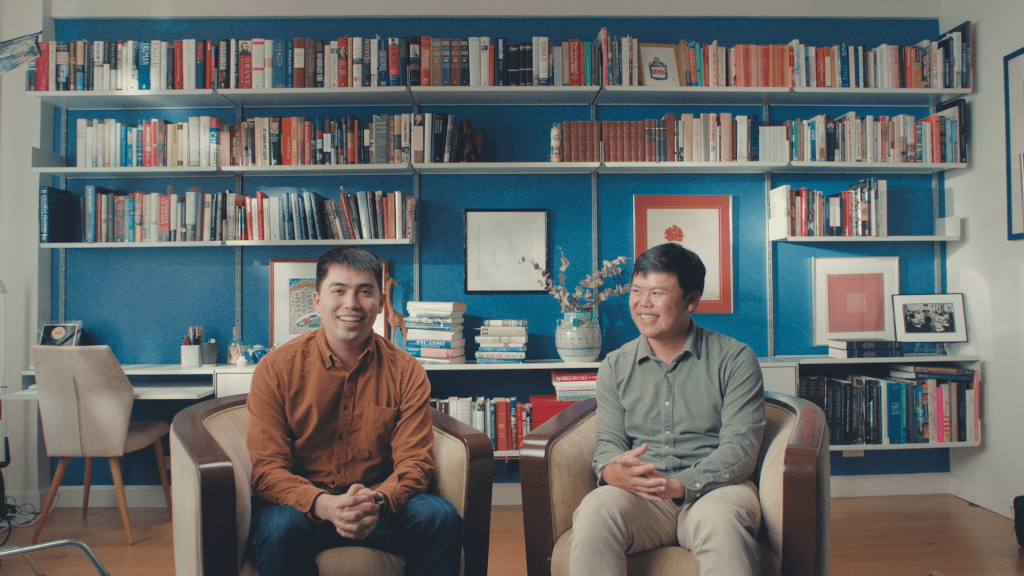
Spero and co-founder Bradley Emi, both Stanford AI grads, started Pangram roughly two years ago. They shipped right after ChatGPT cracked open what Spero calls an internet full of "LLM-powered Russian disinformation campaigns and UAE-influenced campaigns on Twitter."
A Canadian politician accidentally read an AI prompt aloud during a speech to lawmakers this week. arXiv introduced a policy this year saying submissions with evidence of unreviewed LLM output can trigger a one-year author ban. That includes hallucinated references and leftover meta-comments scattered through the text.
Institutions are hardening their stance. And they're doing it fast.
How Pangram 4 works
"Our model is learning the stylistic differences and the choices that AI makes consistently," Spero said. "It isn't relying on copy-paste metadata or hidden watermarks."
The system trained on tens of millions of known human documents. For each one Pangram created a synthetic mirror: an AI-written version matching the original's topic, length, and tone. The model learned to spot the gap.
Pangram 4 claims a false positive rate of 0.0041 percent. One wrong flag per 24,000 documents, down from one in 10,000 on the previous generation.
Spero says the new model is better at catching AI humanizer programs, the tools built to scrub AI text into something that reads human.
It sorts writing into four buckets: entirely human, lightly edited, heavily assisted, fully generated. The tool scores each.
Gradient scoring. No binary yes-or-no.
Pangram Image takes a different path from watermark-based systems like OpenAI's or Google DeepMind's. Instead of hunting for embedded markers, it reads pixel-level distributions and learns the subtle statistical divergences between real photos and AI images. Spero said it can even detect an AI image displayed inside a real photograph.
In testing the image detector flagged AI photos easily, whether photorealistic or cartoonish. A photo of an AI image got through as human once. Spero said the model is in research preview and wider release is coming in the next few weeks.
The crowded field
Winston AI, Originality.ai, Copyleaks, and GPTZero all chase the same market. Each one claims it's the best.
Research on AI detection carries real limits. MIT Sloan's teaching group calls the tech "far from foolproof." Mozilla Foundation found reliability gaps in real-world use.
Multiple universities dropped or restricted detector use. The University of Waterloo shut off Turnitin's detection feature in September.
Platforms are betting anyway.
Substack integrated Pangram in July, letting readers see which newsletter authors use AI. Quora is a customer. Spero said other API users include schools, universities, publishers, agents, and recruiters.
These aren't pilot runs. Substack and Quora are betting core product on this.
Both companies depend on human content as their primary asset. When the platform that hosts your newsletter starts labeling AI content, detection stops being a tool you install. It becomes a setting your readers expect.
"We're getting new GPUs faster than new people are being born," Spero said. "If we do not actively discriminate in favor of human content, then we're just gonna see more and more AI, and it's just gonna drown out any human signal that we have."
The business model
For $20 a month Pangram sells a Chrome extension that labels posts on X, LinkedIn, Substack, Reddit, and Medium in real time. It shows a feed health score: the percentage of human versus AI content on your screen.
Enterprise customers get the same tech through an API.
The dual approach works. Selling to consumers builds brand recognition and usage data. Licensing to platforms locks in recurring revenue.
When detection standardizes, the company with both ends of the market wins.
For publishers: integrate AI detection into editorial workflow now, not for enforcement, but for baseline visibility. For platforms: ship AI content labeling. The demand is already there even where the release is not.
Source
https://techcrunch.com/2026/07/29/as-ai-content-floods-the-internet-pangram-raises-9m-to-detect-it/
https://siliconangle.com/2026/07/29/pangram-labs-raises-9m-launch-accurate-ai-detection-text-images/
https://www.pangram.com/blog/introducing-pangram-4
https://www.pangram.com/blog/introducing-pangram-image-detection