Kebra (YC S26) makes field service companies AI-native
Kebra, a Y Combinator S26 startup founded by Luca Hadife and Mohamed Hosny, deploys AI agents that capture what happens during field service jobs and automate the back-office work that follows: job notes, warranty claims, parts orders, customer updates, and invoices. The company is already live with field service companies across Florida, Pennsylvania, and California.
The decision it puts on your desk
field service companies that still require the back office to reconstruct jobs from voice memos are losing warranty recoveries, parts accuracy, and customer response time on every single job. Audit your job-to-closeout cycle today. If it averages more than 4 hours, Kebra closes that gap to under 5 minutes.
Field service still runs like it is 2015.
I looked at what happens inside a typical HVAC company and the cracks are not where you would expect them. A technician finishes a job, records a voice memo, and drives to the next house.
Someone in the office opens the file three hours later, listens to an 84-minute recording, and tries to reconstruct what happened. Nobody filed the warranty claim. The serial number never made it into the system.
Kebra, a Y Combinator S26 startup, deploys AI agents that close the distance between the truck and the back office.
Luca Hadife and Mohamed Hosny founded the company, which operates as Third Eye AI Inc. It is already live with field service companies across Florida, Pennsylvania, and California.
"Kebra captures what happens in the field and puts the back office on autopilot," the company said in its launch announcement Tuesday.
Before the truck leaves the driveway, Kebra's agents turn every job into structured notes, a filed warranty claim, a parts order, a customer update, and a draft invoice.
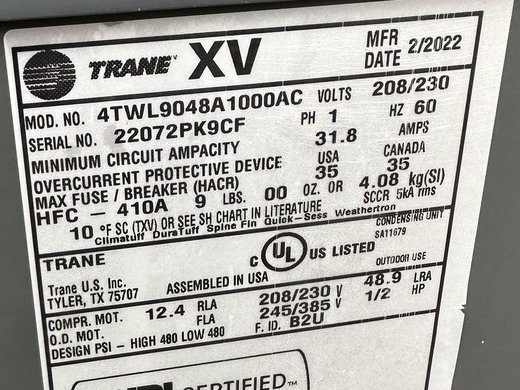
Kebra's agents wrap around a technician's existing routine. The tech records the job like they always have. Kebra pulls out the model number, serial, diagnosis, part used, and follow-up recommendation.
When something is missing, the agent texts the technician directly before they leave the property.
One photo of the nameplate.
One more detail the office used to chase for three days.
On the integration side, Kebra syncs into ServiceTitan for job notes, QuickBooks for invoicing, Trane's warranty portal for claims, and Johnstone Supply for parts reordering. It sends the customer a service report through Gmail and a follow-up text.
One job. Six agents. Six systems.
The company said its team climbed into a few 140-degree attics alongside technicians early on. "You can't automate what wasn't documented," they said of the lesson they took from that fieldwork.
A missing serial number costs the company a warranty recovery, a restock fee on the wrong part, and a call three days later when the customer realizes nobody mentioned the aging outdoor unit.
Most field service companies do not hit the automation wall. They hit the documentation wall first. Long before anyone asks whether the AI works.
I think the sequencing is the detail most people will skip past on a first read. Kebra's agents do not fire after the technician files the job from their truck hours later. They fire the second the job closes. The warranty claim submits while the unit is still cooling down. The customer gets a text before they have had time to wonder what happened.
They have maybe five minutes between job close and the tech pulling out. If the capture is complete, the automation probably just runs.
I get the sense companies like Kebra are the shape vertical AI actually takes in practice. The headline is not AI agents for field service. Everything that sits between a job closing and a job being complete gets handled by software someone deployed once, trained on real recordings, and then mostly stopped thinking about. The back office stops chasing and starts reading.
Kebra is accepting demo requests at kebra.com.
Source
← Previous
Pangram raises $9M to detect AI-generated text and images as the slop problem hits a breaking point
Next →
Lamina Labs raises $4.8M to make AI explain with video, not just text
The Morning Recap
We sift the day. You make the calls.
The decision on every story, in your inbox before your first call.