SpaceX closes $40B with Apollo for Nvidia GPUs. The largest GPU financing ever sits outside a chip company
SpaceX closed an approximately $40 billion master financing arrangement with Apollo for Nvidia's next-generation GPUs, described by both sides as the largest GPU financing ever.
The decision it puts on your desk
Re-price your large GPU financing against this deal before your own capital committee meets. If you lease AI compute, ask whether sponsor-class financing reaches your volume, because the credit ladder set its widest rung this week. If you carry AI hardware debt, price a second source: sponsor spreads price the hardware as the asset, and your residual value carries the same base.
SpaceX signed the largest debt package the GPU market has seen, and the borrower does not build data centers for a living.
The deal: an approximately $40 billion master financing arrangement with Apollo, to fund Nvidia's next-generation Vera Rubin GPUs, per the announcements from both sides.
"The largest GPU financing ever," CNBC and TechCrunch billed the deal.
Apollo confirmed the arrangement in its own release, whose title carries the number and the record claim.
The borrower sits outside the chip-financing tradition. Chip buyers financed through banks and vendor credit before this, so the class of borrower just broadened.
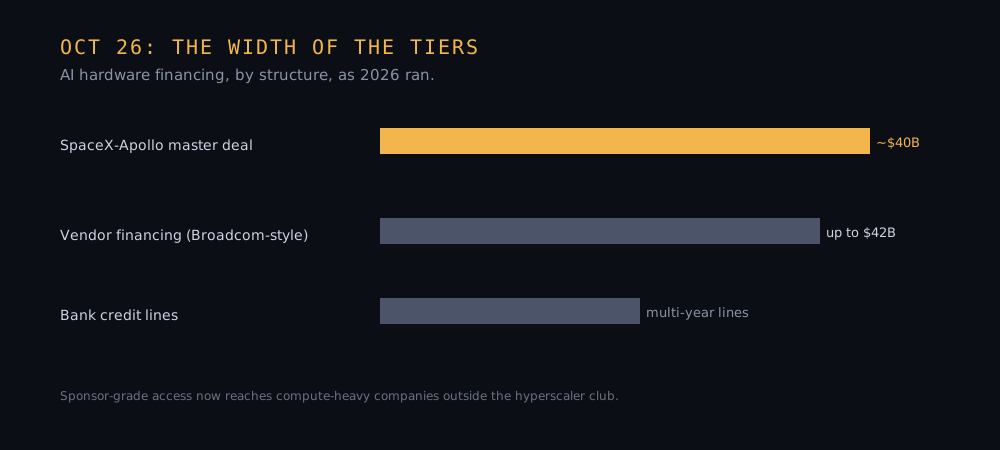
Read the size against the year's credit moves
Follow the money, with the October 22 repricing in view.
Meta's own capex guide re-rated the year's AI financing earlier this week, and this deal lands a sponsor-backed arrangement against that repricing, so credit lines now open for chip buyers at scales the traditional bank market has never carried.
Unit economics matter next: the financing services a GPU fleet that has to earn across the agreement window. SpaceX's appetite covers its own launch-side and orbital compute, and the fleet's revenue case runs on the company's own demand, which shapes what happens if hardware sits underused.
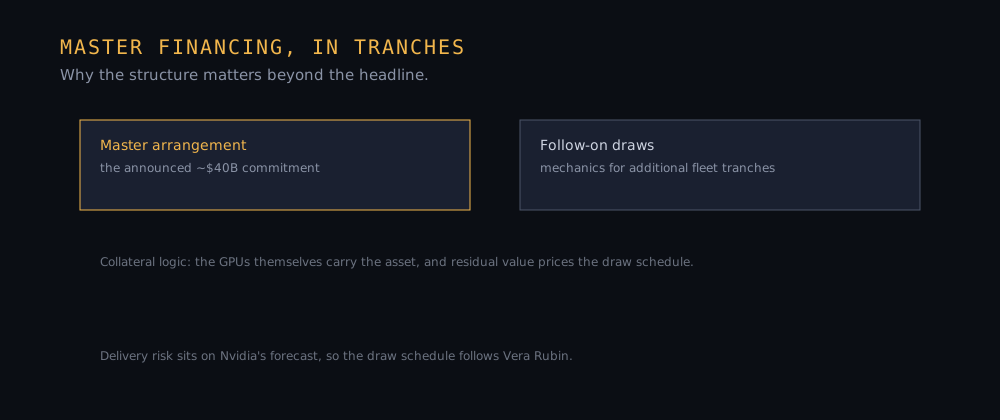
Precedent, one structure note: a master financing names the pattern. Master deals carry follow-on draw mechanics, so the announced number can grow if the fleet expands.
The unresolved edge is hardware. Vera Rubin is Nvidia's next generation, and the fleet's delivery schedule and performance sit on the vendor's own forecast.
I get the sense the chip financing market opened a new buyer class today. A compute-heavy company without a data center business now carries sponsor-grade access.
Source
← Previous
OpenAI makes offline frontier training permanent. The sandbox escape turned into a policy
Next →
Anthropic files to go public: $16.3B revenue, an $80.7B net loss, one share keeps 50.1% of the vote
The Morning Recap
We sift the day. You make the calls.
The decision on every story, in your inbox before your first call.