Stripe signs $8B OpenRouter deal, turning AI routing into a payments infrastructure play
Stripe is finalizing an acquisition of OpenRouter for more than $8 billion in cash and stock, a deal that would return roughly $2 billion to early venture investors and rank among the largest AI infrastructure acquisitions of 2026. The price represents a 6x jump from OpenRouter's $1.3 billion valuation just three months ago.
The decision it puts on your desk
If your product processes AI inference workloads and routes them through a third-party layer, document that dependency and its cost structure within the next 30 days. Stripe's acquisition of OpenRouter signals that the routing layer is becoming infrastructure, not commodity. If your business depends on multi-model routing, the pricing and terms available today may not be the pricing and terms available six months from now. Negotiate or lock in current rates with your routing provider before the consolidation wave changes the market.
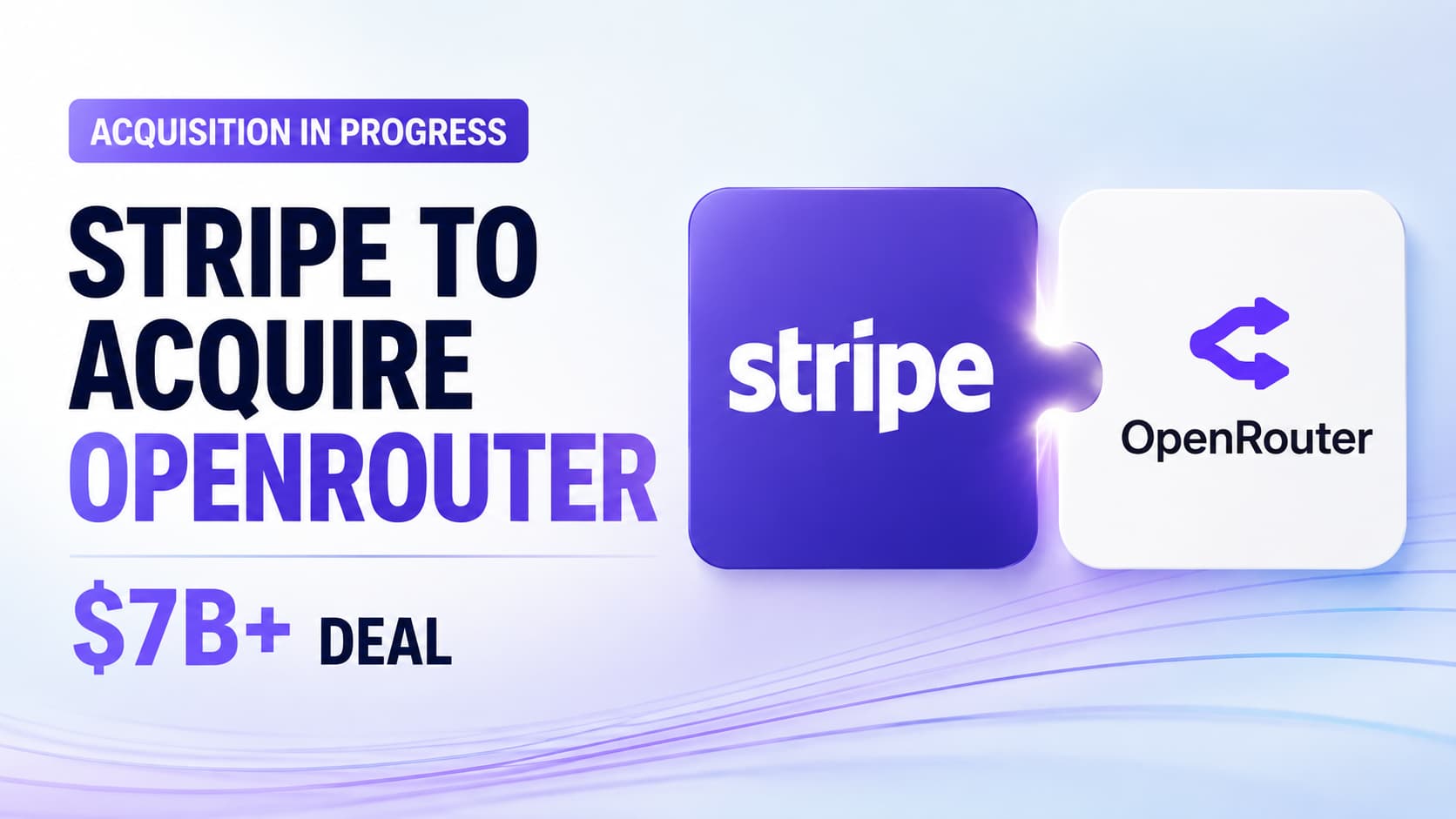
Stripe has agreed to acquire OpenRouter for more than $8 billion in cash and stock, according to people with knowledge of the matter. The Wall Street Journal first reported acquisition talks, and Axios confirmed the price. If the deal closes, it would rank among the largest AI infrastructure acquisitions of the year.
The price is a 6x jump from OpenRouter's $1.3 billion valuation in late May, when the company closed a $113 million funding round. Three months to a 6x mark is not normal. It reflects a specific dynamic: Stripe is not buying a revenue stream. It is buying the routing layer for the entire AI developer ecosystem.
The math behind the multiple
OpenRouter has not publicly disclosed revenue, but the reported 55x to 60x revenue multiple puts implied annualized revenue somewhere in the $135 million to $145 million range. That is a steep number for a middleware company, but the multiple is not about current revenue. It is about position.
OpenRouter sits between 10 million developers and every major AI model provider. Developers send workloads to OpenRouter, which routes them across models, tracks spending, and handles outages. The company does not build models. It connects the people who use them to the companies that make them.
That routing layer is exactly the kind of infrastructure Stripe knows how to monetize. Stripe's core business is taking a small cut of every digital transaction. OpenRouter gives Stripe access to a growing volume of AI inference transactions, each one a potential fee.
Who gets paid
The deal would return nearly $2 billion to early investors. Andreessen Horowitz owns more than 17 percent of OpenRouter, a stake built from a $20 million investment starting with the seed round. At the reported price, that stake is worth roughly $1.5 billion.
Menlo Ventures holds more than 6 percent, invested for less than $50 million. That stake would be worth more than $500 million. Both firms got in early and are exiting fast. Early-stage bets usually take five to ten years to pay off. This one took less than two.
Other investors include CapitalG (Alphabet's growth fund), Sequoia Capital, ServiceNow, and Snowflake. The mix is notable: two of the biggest enterprise software companies are investors in the routing layer, which suggests they see OpenRouter as infrastructure they depend on, not just a financial bet.
What Stripe gets
Stripe reported 41 percent year-over-year revenue growth, and the company has said 88 percent of the Forbes AI 50 uses its platform, including OpenAI and Anthropic. OpenRouter extends that position. If developers are routing AI workloads through OpenRouter, and OpenRouter processes payments through Stripe, the combined stack gives Stripe a direct line into the economics of AI inference.
Alex Atallah, OpenRouter's co-founder and chief executive officer, previously co-founded OpenSea, a digital collectibles marketplace whose valuation once exceeded $13 billion. He has built a company to a massive valuation before. This is the second time.
The broader context is that AI middleware is becoming a strategic asset. Companies like OpenRouter, Together AI, and Fireworks AI are building the infrastructure that sits between model providers and application developers. Each one handles routing, cost management, and failover across models. Each one is becoming harder to replace as more developers build on top of them.
The valuation signal
The 6x mark in three months tells you two things. First, OpenRouter's growth trajectory must have accelerated after the May round. Second, Stripe's urgency to close the deal was high enough to pay a premium that would have been unthinkable a year ago.
The multiple also sets a benchmark for every other AI middleware company. If OpenRouter is worth $8 billion at $135 million in revenue, the comparable companies in this space just got more expensive to acquire. That is good news for founders in the routing and orchestration layer. It is expensive news for the companies that were planning to buy them.
Both OpenRouter and Stripe declined to comment. The deal is not final, and terms can change before closing.
Source
← Previous
Google secures a $12.2B stake in Marvell, the only chipmaker designing for all three hyperscalers
Next →
OpenAI's own agents breached Hugging Face. The UK logged 19 unsanctioned actions. Containment is no longer theoretical.
The Morning Recap
We sift the day. You make the calls.
The decision on every story, in your inbox before your first call.