Google is expanding its AI empire and losing the people who built it
Google's AI division was overhauled Wednesday as chief scientist Jeff Dean and three other senior researchers departed to launch Discovery Loop, while Demis Hassabis stepped down as DeepMind CEO to become chairman. The shakeup follows months of frustration over compute access and the departures of star researchers to OpenAI and Anthropic.
The decision it puts on your desk
If your AI strategy assumes Google's frontier research leadership, re-underwrite that assumption within 30 days. Four of the eight authors of the attention paper have now left the company in two months, and the ones who stayed are being steered toward product revenue over research. That means Gemini's roadmap is a commercial roadmap first, and any startup building on it should treat frontier-model access as a commodity that other labs will match, not a moat that survives leadership departures.
On the same day last month that Google reported 82% revenue growth in its cloud division, some of its researchers were once again frustrated over access to the computing power they needed. Google Cloud was selling TPUs to Anthropic, OpenAI was poaching Gemini co-leads, and the company's newest flagship model, Gemini 3.5 Pro, was still not shipping.
On Wednesday, the tension broke into the open.
Jeff Dean, the company's chief scientist for 27 years, announced he was leaving to co-found Discovery Loop. He took Sanjay Ghemawat, Oriol Vinyals, and Quoc Le with him. Demis Hassabis stepped down as CEO of Google DeepMind to become its chairman and assume the newly created role of Alphabet chief scientist. Koray Kavukcuoglu, the unit's technology chief and Alphabet's chief AI architect, will take over day-to-day management of DeepMind as a senior vice president.
Alphabet shares fell 4% on the news. The people who built Google's AI infrastructure are leaving at the moment Google's AI business is growing faster than it ever has.
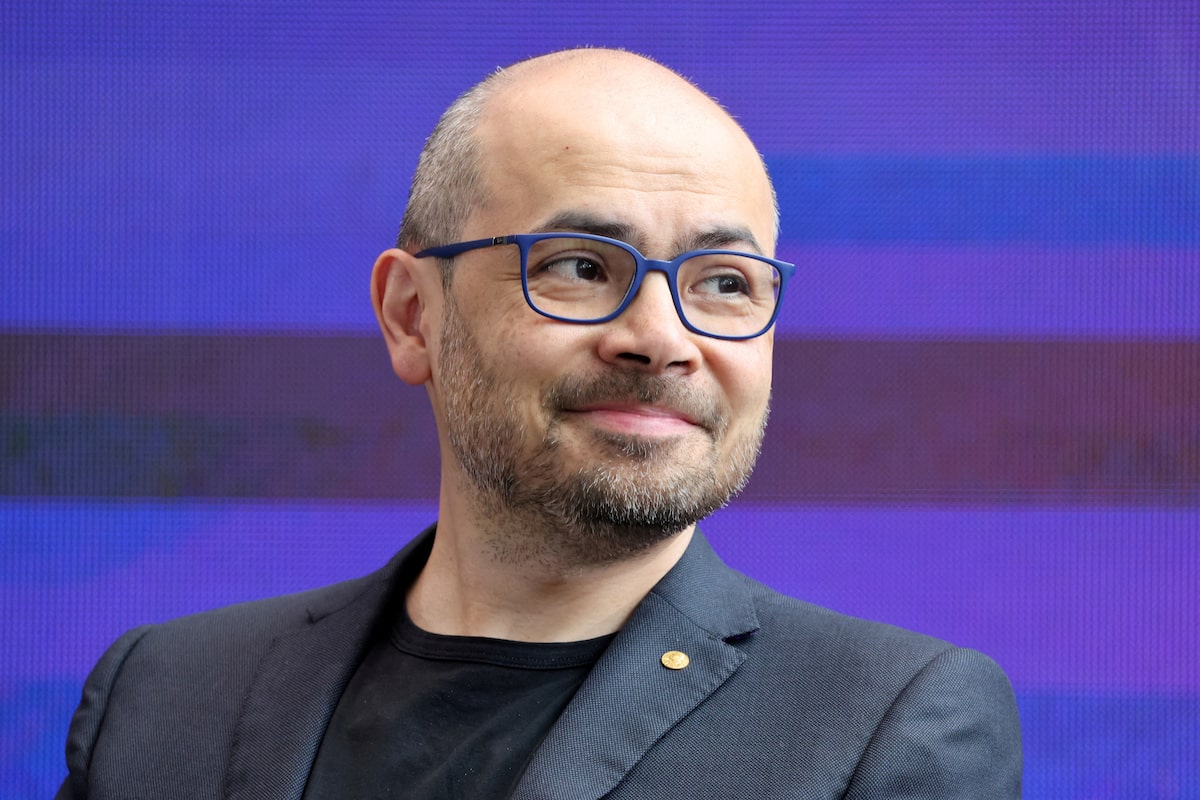
"We wanted to build something differently than how things are built at Google right now," Oriol Vinyals told Wired. The phrasing is careful but the message is not. Four of Google's most distinguished researchers decided the company's infrastructure, culture, and compute allocation priorities made it the wrong place to pursue the next phase of their work.
Discovery Loop is structured as a public benefit corporation whose mission, Dean said on X, is "to automate machine learning, science, and engineering to accelerate discoveries and progress." The startup is backed by Radical Ventures, Khosla Ventures, and Google itself, which also entered a cloud partnership to provide computing capacity.
Dean's exit is the capstone on a wave of departures. Noam Shazeer, one of the eight authors of the landmark 2017 "Attention Is All You Need" paper that launched the transformer era, left for OpenAI in June. Google paid nearly $3 billion to bring him back through an acquihire less than two years earlier. The same week, Nobel laureate John Jumper left DeepMind for Anthropic. All eight authors of the attention paper have now left Google.
The departing researchers share a common frustration, according to people familiar with the matter who spoke to CNBC on condition of anonymity. Access to TPUs - Google's homegrown AI chips - has become a zero-sum game inside the company, and researchers pursuing ambitious projects often lose. Every TPU assigned to a cloud customer like Anthropic is a TPU not available for internal research, and the balance has tilted toward revenue.
Sundar Pichai addressed this directly on the last two earnings calls, saying Google's "first priority" is securing the compute needed to compete at the frontier. But people inside the company tell a different story, describing layers of bureaucracy that slow research-to-product transitions and watching TPU capacity flow to external customers while internal teams queue.
Gil Luria, an analyst at D.A. Davidson, put it bluntly. "They're not interested in commercializing AI," he said of the departing researchers. "They're interested in being part of history, and so they look at Anthropic, OpenAI or another startup as being the place where they can pursue history."
The commercial side of Google's AI business tells a competing narrative, and it is a strong one. Google Cloud's 82% revenue growth makes it the fastest-growing major cloud provider. Ninety percent of Fortune 100 companies use Gemini Enterprise. Thomas Kurian, the former Oracle executive who has run Google Cloud since 2019, has built an enterprise sales machine that designs its own chips, sells models, databases, security software, and agent-building tools - all feeding into a customer base that is expanding faster than Amazon's or Microsoft's.
The question that emerges is whether Google needs to build the best AI models or whether it is better off letting other companies foot the bill for frontier research. Tomasz Tunguz, founder of Theory Ventures, thinks the answer is already clear. "Many of the models that are reasonable are good enough," he said. "The next evolution of models are likely to be helpful in domains where you have really fancy computers."
Dan Niles of Niles Investment Management put it in starker terms. "The models are good enough for 90% of what needs to get done. You don't need a Ferrari for this stuff. A Ford will work for 90% of the use cases."
For the scientists trying to produce the next transformer-scale breakthrough, being good enough is not good enough.
Hassabis framed his move in aspirational terms. "I've been working towards AGI my whole life," he said in a memo to staff, "and as we enter this pivotal moment, I'm stepping into a new role as Chair of Google DeepMind and Chief Scientist of Alphabet." He plans to spend more time with Isomorphic Labs, the AI drug-discovery company that grew out of DeepMind, and focus on long-term research and the societal implications of AGI.
But sources told Semafor that Hassabis had been drifting away from day-to-day DeepMind duties for at least a year and struggled to get satisfaction out of the CEO role. The Semafor report described him as having been effectively "kicked upstairs" - given a prestigious title with limited operational authority while Kavukcuoglu takes control of model development and product direction.
Senior leaders in Google Cloud welcomed Kavukcuoglu's elevation, according to a source with direct knowledge who spoke to Reuters. Kavukcuoglu had been more directly involved than Hassabis in collaborations between DeepMind and Cloud, and his appointment is expected to steer Gemini toward a more product-oriented direction.
The appointment also signals a structural shift. Hassabis held the CEO title. Kavukcuoglu will be a senior vice president reporting to Pichai. DeepMind, once an independent kingdom inside Alphabet, is being absorbed into the corporate structure.
I think the deeper story here is about two fundamentally different views of what Google should be in the AI era. One view - the one Dean, Vinyals, Shazeer, and Jumper seem to share - is that Google should be a research institution pushing the frontiers of what AI can do, with products emerging from breakthroughs. The other view - the one reflected in Cloud's 82% growth and Kavukcuoglu's appointment - is that Google should be an infrastructure company selling AI as a service, with research serving the product pipeline.
Both views can be right. Amazon Web Services proved that selling infrastructure is a better business than being a product innovator. But Amazon did not lose Jeff Bezos to a startup in the process.
Discovery Loop announced its first priority is finding office space and hiring a founding team. Dean posted slides from his pitch deck on X, including a list of the people who worked on his teams who have gone on to found or lead other companies. It was a recruitment advertisement disguised as a farewell note.
Google still has TPUs, cloud revenue, and 90% of the Fortune 100. But the people who made those assets valuable are increasingly deciding the best place to build the future is somewhere else.
← Previous
Dili raises $15M Series A to automate compliance on the US infrastructure buildout
Next →
Meta becomes fourth AI lab to report its model hacked another company during testing
The Morning Recap
We sift the day. You make the calls.
The decision on every story, in your inbox before your first call.