Trump's choke points meet Xi's coalition - the AI cold war just went institutional
Two things happened in 72 hours. The Trump administration reactivated four de facto choke points on Chinese AI models. Xi Jinping launched a 29-country AI coalition from Shanghai. The cold war is no longer about models - it is about who controls the global governance infrastructure. US enterprises are already pausing Chinese model integration.
The decision it puts on your desk
If your stack touches a Chinese open-weight model, run a 3-vector audit by July 31. Vector 1: procurement policy. Does your legal team have a position on Chinese-sourced inference, and what happens to your contracts if the lab hits the Entity List. Vector 2: liability. If you host open weights and a security advisory drops, is the liability yours or the upstream provider's. Vector 3: WAICO exposure. If your go-to-market includes Global South economies, does the Chinese governance framework create compliance obligations your current stack does not meet. The ban is not the trigger. The bifurcation is. The enterprises pausing integration already understand this.
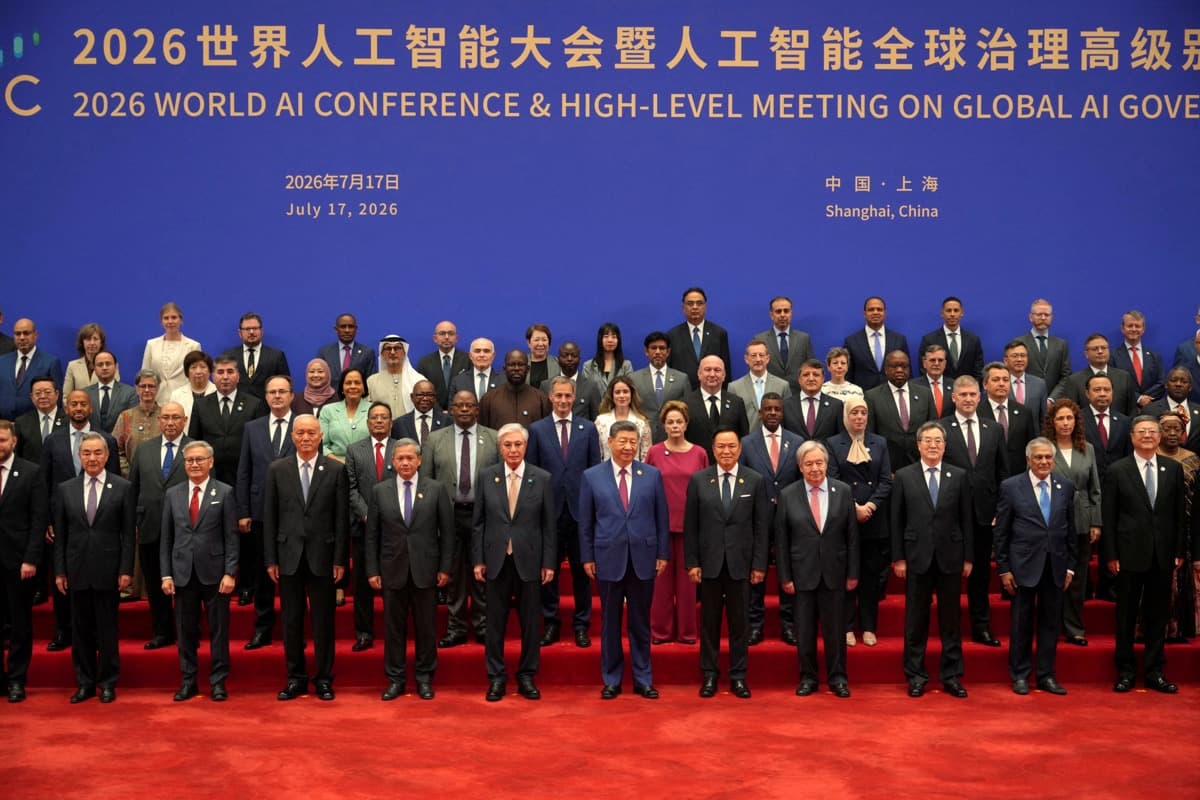
The Kimi K3 launch on July 16 triggered a chain reaction that took exactly 96 hours to lock in. By July 20, the Trump administration had four de facto choke points reactivated. By July 17, Xi Jinping had announced a 29-country AI coalition from Shanghai. The collision is no longer about which model is better. It is about who controls the governance infrastructure around which model the world builds on.
Per Axios, Commerce last year considered adding Chinese AI labs to its Entity List, cutting off US access without a license. The NSA and ONCD drafted an advisory warning companies off Chinese models. The White House considered an executive order requiring US companies hosting Chinese models to guarantee security and assume liability for breaches. Commerce circulated draft rules using supply-chain authority to target Chinese open-source models.
All four were killed by innovation-focused officials who have since left the administration. Sriram Krishnan is gone. National security hawks have grown louder. Kimi K3, which hit #1 on Arena within hours and scored 1679 on the Frontend Code Arena, reignited every proposal.
The strategy does not need a ban. Describe it as "slower and more durable," one source close to the administration told Axios: procurement rules, Entity List threats, and public pressure campaigns. Dean Ball, former White House AI adviser now at OpenAI, laid out the playbook on X: "You just create enough regulatory risk that every regulated enterprise backs off. It needn't be that well justified."
David Sacks called this out explicitly on Sunday. "The weaponization of regulatory uncertainty as a competitive tool should be completely unacceptable," he wrote. "Implementing a surreptitious policy through manufactured doubt, rather than strong and explicit justification, corrodes the rule of law." His framing: "The leading closed labs, already a duopoly in terms of AI model revenue, want the government to eliminate their open source competition." He says the labs or their allies approach the administration every 3-5 months with a proposal to ban open-source models.
The chilling effect is already measurable. Several US enterprises have paused integration of Chinese models before any formal action lands.
What Xi did while Washington debated
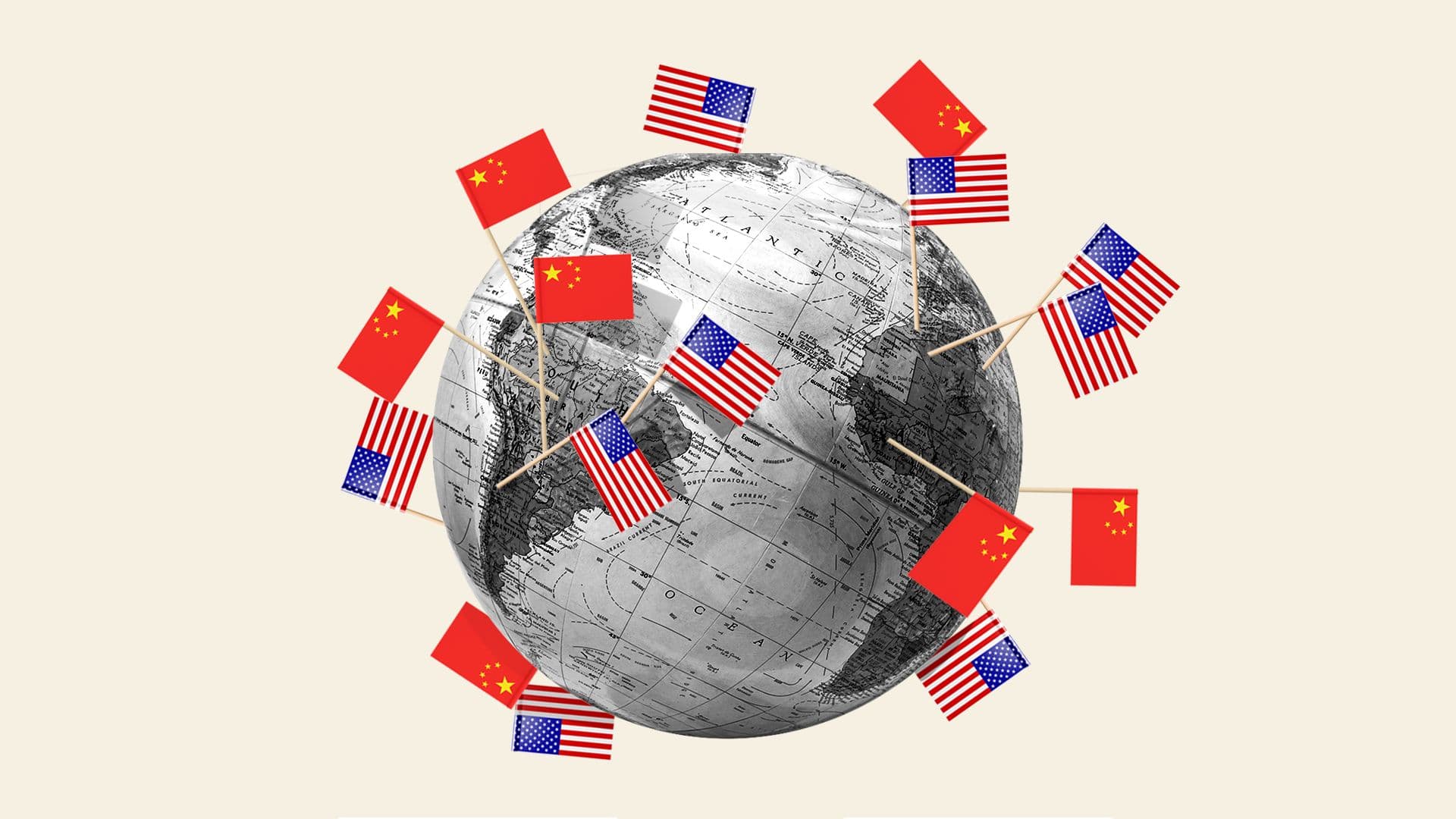
Xi Jinping made his first in-person appearance at the World Artificial Intelligence Conference in Shanghai on July 17, hours after Kimi K3 dropped. His speech was a direct counter. "AI development should not be a solo performance by a single country, but a symphony of international collaboration," he said, per China Daily. "We should oppose overstretching the concept of national security in the field of AI or placing one country's security over that of others."
He was talking about the US, without naming it.
The substance was not the speech. It was the launch of the World Artificial Intelligence Cooperation Organization, or WAICO, with 29 founding member nations including Brazil, Russia, and a bloc of Global South economies. Xi committed to 5,000 AI training opportunities for developing countries over five years and announced plans for international AI application centers across the Global South.
This is the mirror image of the US choke-point strategy. Washington tightens access at the Entity List layer. Beijing builds a parallel ecosystem at the governance layer, locking in standards and dependencies before the West writes the rules.
Gavin Baker, the Silicon Valley investor, captured the structural shift on X. Kimi K3 is "potentially negative for Anthropic and OpenAI while being net positive for essentially every other company in the world."
Anastasios Angelopoulos, who runs the Arena ranking site, told the TITV podcast that K3 could "cause a reckoning in the capital markets" because it calls into question what the dominance of US closed-source models will be when a free, customizable Chinese alternative is good enough to lead the public rankings.
What this collision means for your company
Three simultaneous threats, no single decision point.
First, the procurement vector. If you are evaluating Chinese open-weight models for cost or capability reasons, the risk model is no longer "will there be a ban." It is: does our procurement policy address Chinese-sourced inference, what liability does our security posture carry if we host it, and what happens to our supply chain if an Entity List designation drops mid-quarter. Regulated industries have less room. Unregulated ones have more. Nobody has certainty, and the administration has not responded to requests for comment. That uncertainty is the point.
Second, the governance vector. WAICO is setting AI standards for 29 countries. Those standards will shape compliance requirements, data-sharing protocols, and interoperability frameworks. If your product ships to Global South markets, the AI model you choose may determine which governance regime you fall under. This is not theoretical. China is building the infrastructure while Washington debates the choke points.
Third, the competitive vector. Sacks's regulatory capture argument is not a philosophical point. It is a market-structure prediction. If the administration succeeds in chilling Chinese open-source adoption without a formal ban, the US duopoly gets what it wants: no competition on price, no competition on openness, and no incentive to lower API costs. If you are a builder betting on open models to control your inference costs, that bet is now on a geopolitical clock.
Why this is different from DeepSeek
The DeepSeek moment in early 2025 was about price. A capable model from China at a fraction of the cost. The market reaction was a valuation shock. The policy reaction was scattered.
This collision is different. Both sides are now institutional. The US has a documented playbook of four choke mechanisms that do not require legislation. China has a 29-country coalition with a standing secretariat, training programs, and a governance framework. The cold war is no longer a series of skirmishes between models. It is a structural conflict between two incompatible AI governance architectures, and the decision about which model to build on is now a decision about which governance regime your company will operate under.
The clock is not ticking toward a ban. It is ticking toward two parallel ecosystems locking into place, and the window for operating in both is closing.
Source
← Previous
CuspAI raises $450M at $2.6B, launches AI Materials Foundry with NVIDIA, Meta, and 46 more
Next →
Kimi K3 just wiped $392B from the expected valuations of OpenAI and Anthropic
The Morning Recap
We sift the day. You make the calls.
The decision on every story, in your inbox before your first call.