Sanja Fidler leaves Nvidia, raises $90M for Veeda AI and the world models race
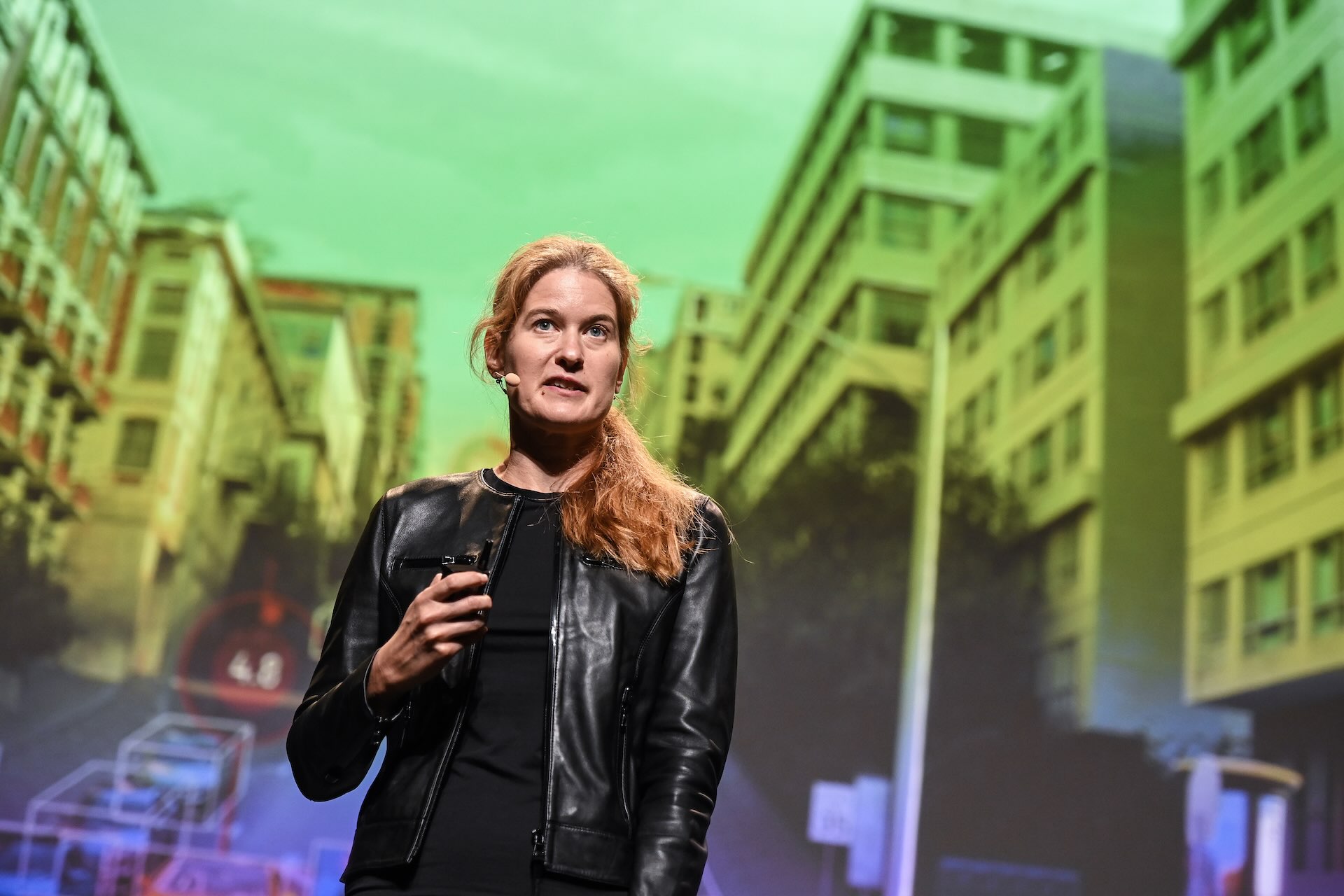
Sanja Fidler, the former head of Nvidia's Spatial Intelligence Lab, launched Veeda AI with over $90 million in seed financing from Khosla Ventures and Radical Ventures. The Toronto-based startup is building multimodal foundation world models for physical AI and robotics, with co-founders Huan Ling (chief scientist) and Zan Gojcic (CTO), both former Nvidia colleagues.
The decision it puts on your desk
If your company builds physical AI products, from warehouse robotics to autonomous vehicles, evaluate your world model strategy within 90 days. The talent pool for this technology just thinned by three senior researchers and $90 million of capital. Veeda's lineage from Nvidia's world model program is unique, but lineage is not a product. Decide whether to build your own world model, buy access to one, or partner with a startup that has the talent and the compute to build it for you. The incumbents are not standing still, and the window to choose narrows every quarter.
Sanja Fidler spent eight years building Nvidia's Toronto AI lab into one of the chip giant's most important research units. Now she is raising $90 million to compete with it.
Veeda pulled in over $90 million USD in seed financing from Khosla Ventures and Radical Ventures, according to people familiar with the matter and corporate filings reviewed by The Logic. The round would rank among the three largest seed deals in Canadian history.
Fidler is the chief executive. Her co-founders are Huan Ling, who will serve as chief scientist, and Zan Gojcic, who will be chief technology officer. All three worked at Nvidia's Spatial Intelligence Lab (SIL) in Toronto. Fidler led that unit from 2018 until this month.
"At Veeda, our sole mission is to build simulated reality for Physical AI," Fidler wrote in a LinkedIn post on Wednesday. "Our conviction is that this will become the critical infrastructure layer for all areas of robotics."
What world models are and why they matter
World models are AI systems that simulate how the physical world works. They learn from image and video data to predict what happens next when an action is taken. Think of it as a flight simulator for robots. The AI practices in a virtual environment millions of times before touching anything real.
Fidler compared the concept to The Matrix. Robot intelligence can interact with an entirely virtual world in a million possible ways, learning from its own mistakes. It is not safe or economical for such systems to improve with trial and error in real life.
The technology sits at the intersection of computer vision, generative AI, and robotics simulation. Nvidia's SIL team developed software to simulate how autonomous vehicles and humanoid agents would interact with the real world. They also built tools to generate and edit 3D (three-dimensional) digital content. Fidler supervised Ling's doctorate at the University of Toronto. The two were part of the team that created Nvidia's flagship world model.
The funding details
Veeda, legally named Veeda Innovation, incorporated in early June. Late last month, it issued 60.6 million seed shares at $1 each. On the same day, it added two new directors: Radical partner Tomi Poutanen and Khosla partner Sven Strohband.
Khosla confirmed it has backed the firm. Radical later posted on LinkedIn confirming its investment. Radical called Veeda a team with "unparalleled spatial intelligence and simulation expertise."
The $90 million figure is notable for a seed round. Most AI startups raise $5 million to $20 million at the seed stage. Even frontier-model neolabs typically raise $30 million to $50 million in initial rounds. Veeda's financing reflects two things: Fidler's personal reputation in the AI research community, and the growing conviction that world models are the next infrastructure layer after large language models.
The competitive field is already crowded
Veeda is not alone. World Labs, founded by Radical scientific partner Fei-Fei Li, raised $230 million. Advanced Machine Intelligence Labs (AMI Labs), started by former Meta AI chief Yann LeCun, raised $1.03 billion. Waabi, led by another University of Toronto professor and Vector Institute co-founder Raquel Urtasun, raised $750 million in January for autonomous vehicle world models.
What separates Veeda is the team's direct lineage from Nvidia's world model program. Fidler, Ling, and Gojcic did not just study world models in academia. They built the production version at the company that sells the chips the models run on. That gives them an unusual mix of research depth and deployment knowledge.
I think the most telling detail is where Veeda is hiring. Job postings mention generative world models for image, video, and 3D content creation, plus staff to collect training data and manage chip clusters. That is a full-stack operation, not a research lab spinning out a paper.
What this signals about the AI talent market
Fidler is the latest in a growing list of star researchers leaving US tech giants to start neolabs. The pattern is consistent. The researcher builds a reputation inside a large lab, then leaves with a small team, raises a mega-round from major investors, and sets up to build foundation models independently.
The economics are straightforward. A top researcher's salary at a big tech company might reach $2 million to $5 million with equity. Their startup, backed by $90 million or more, can recruit freely, buy compute, and set their own agenda. The upside is uncapped. The downside is funded by some of the most sophisticated investors in AI.
For companies building physical AI products, from warehouse robotics to autonomous vehicles, Veeda's emergence raises a practical question. Do you build your own world model, buy access to one, or partner with a startup that has the talent and the compute to build it for you?
The world model market is forming fast. Fidler just bet $90 million that the answer is a new company, not an existing lab. Khosla and Radical agreed.
Source
← Previous
Etched doubles valuation to $21B in three weeks as Jane Street leads $700M round
Next →
Google secures a $12.2B stake in Marvell, the only chipmaker designing for all three hyperscalers
The Morning Recap
We sift the day. You make the calls.
The decision on every story, in your inbox before your first call.