Dario Amodei Breaks His Silence. Anthropic Has Never Called for an Open-Weight Ban.
Anthropic CEO Dario Amodei published a blog post Monday explicitly stating his company has "never advocated for a ban on open-weights models," after four days of industry speculation that Anthropic was lobbying for exactly that. He agreed with much of the open-weight letter but disputed its safety claims, and laid out three policy measures he supports instead: keeping powerful chips out of China, cracking down on industrial-scale distillation, and mandatory safety testing for all sufficiently capable models.
The decision it puts on your desk
If Anthropic or Amazon is your primary model provider, request their public policy position on open-weight model regulation in writing within 30 days. The open-weight letter now has 90-plus signatories across the full AI stack. The asymmetry between a signed public letter and public silence is the procurement leverage. If your provider cannot produce a policy position you can cite in a vendor review, start building the routing layer to an open-weight fallback. The compliance frameworks that govern model procurement in regulated industries update in Q4. Be on the right side of the paper trail before they do.
Anthropic CEO Dario Amodei said Monday his company has never advocated for a ban on open-weight AI models, breaking a four-day silence that had become the loudest signal in the open-weight policy fight.
"Anyone who has read my past writing should know that I don't regard such bans as a useful measure, but let me state it clearly so that there is no doubt: Anthropic has never advocated for a ban on open-weights models," Amodei wrote in a blog post published Monday afternoon.
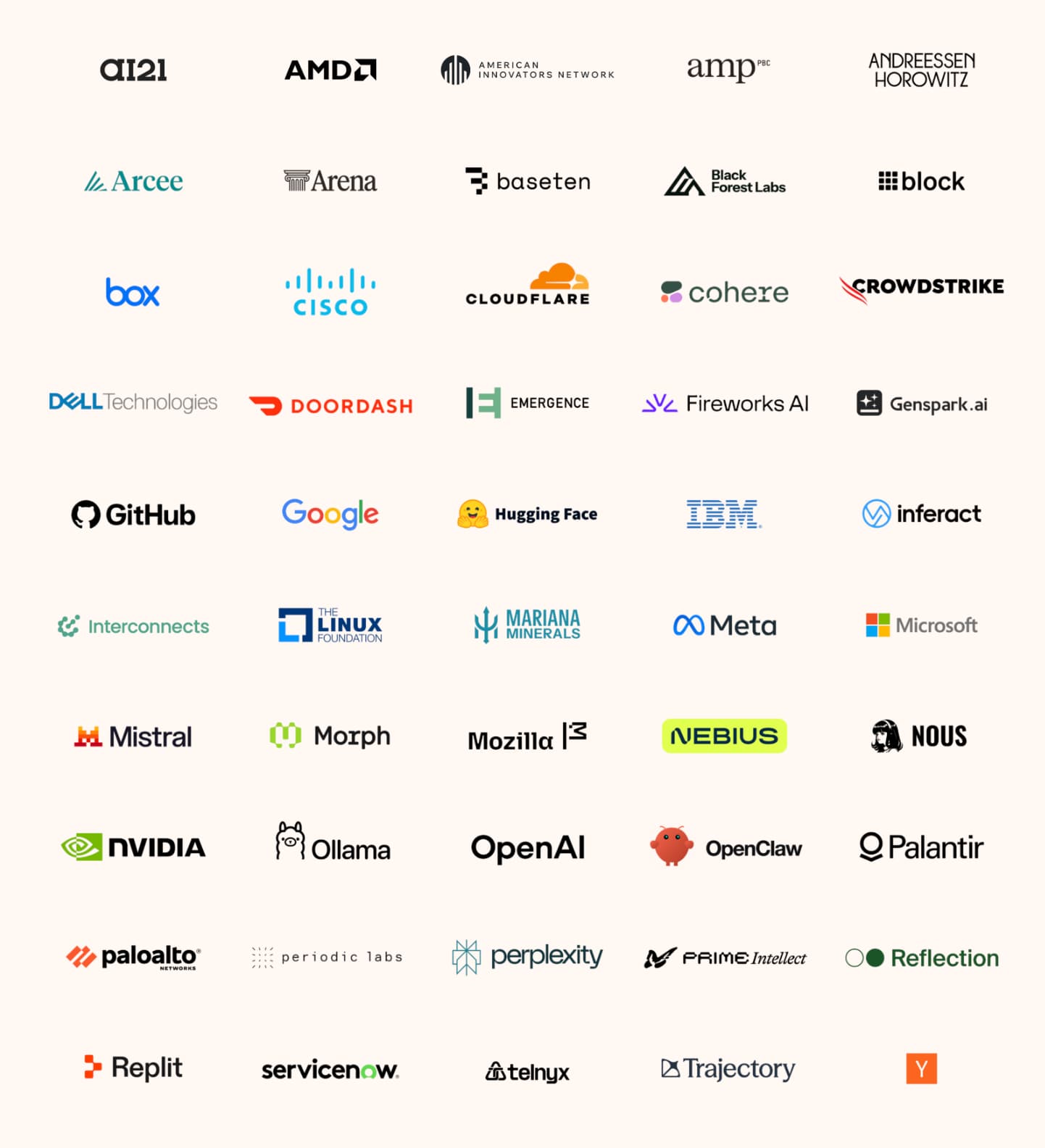
The post landed 72 hours after Jensen Huang posted the open-weight letter on X with 25 signatories. That letter has since grown to more than 90. Anthropic, alone among major frontier labs, still has not signed it.
The absence had become the story. Former White House AI Czar David Sacks said Anthropic was lobbying to hamstring Chinese competitors. The Next Web called Anthropic "the last major AI lab that has not signed." TechCrunch noted Anthropic's silence came weeks after its own Fable 5 model was banned from export, then reinstated on July 1.
Amodei addressed the accusation directly. "Some people have even accused Anthropic of wanting to ban open-weights models as a means of protecting our business," he wrote. He called open-weight models without dangerous capabilities "a public good."
But he drew a line the letter does not.
"I don't agree with the letter's assertions that open-weights models necessarily make it easier to develop safeguards or that broad access to capabilities necessarily helps defenders more than attackers," Amodei wrote. "It seems at least as likely to me that the opposite will be true."
He cited biology as the example. A sufficiently capable model could weaponize pandemic-level viruses with widely available materials, while defense is a multi-year operational task. "Questions like this should be empirically answered by rigorous pre-release testing, not assumed in advance."
Amodei laid out three measures he supports instead of a ban. Keep powerful chips and chipmaking equipment out of China. Crack down on industrial-scale distillation operations. Require mandatory safety testing of all sufficiently capable models, open and closed, before release.
On the third point, he said he had been "heartened" by the Trump administration's recent movement and by industry proposals from Demis Hassabis that would apply testing globally.
"I think this idea is actually close to a consensus," Amodei wrote.
He also addressed the letter's distillation paragraph directly. The letter calls distillation "a widely used technique" and says concerns should be handled through "targeted legal and commercial frameworks." Amodei agreed with that framing — exactly the same measure he proposed in his own post.
That overlap is the landing zone. Both sides want distillation restrictions. Neither wants a blanket ban. The fight is over who defines the rules.
The blog post has now drawn coverage from TechCrunch, CNBC, Politico, Axios, and Business Standard. All of them frame it as the closed camp's counterweight to the 90-company coalition.
The letter signatory count is still moving. Anthropic is still not on it.
Source
← Previous
Anthropic never shipped a noindex tag. Hundreds of Claude shared chats landed on Google.
Next →
Cyera Acquires Oasis Security for $1B as Non-Human Identity Becomes a Platform War
The Morning Recap
We sift the day. You make the calls.
The decision on every story, in your inbox before your first call.