Glow emerges from stealth with $180M at $1.2B valuation to rebuild endpoint security for the AI era
Israeli cybersecurity startup Glow emerged from stealth July 22 with $180 million in all-equity funding at a $1.2 billion valuation, backed by Sequoia Capital, Cyberstarts, Greenoaks, and Redpoint Ventures. Founded by former Meta, Snowflake, and Claroty executives, Glow is building an AI-native endpoint security platform that replaces detection with prevention, betting the $40 billion endpoint market needs a ground-up rewrite for the AI era.
The decision it puts on your desk
Audit your endpoint security stack against AI-native architecture within 60 days. If your current provider was built for detection and you are deploying AI agents and tools at the rate Glow's data suggests, map the gap between what your EDR can see and what 12,000 pieces of endpoint software can do. If the gap is larger than your risk tolerance allows, run a proof of concept with an AI-native provider before the budget cycle locks your existing contract for another year. The decision is whether to treat endpoint security as a detection problem or a prevention problem. The AI era has an answer.
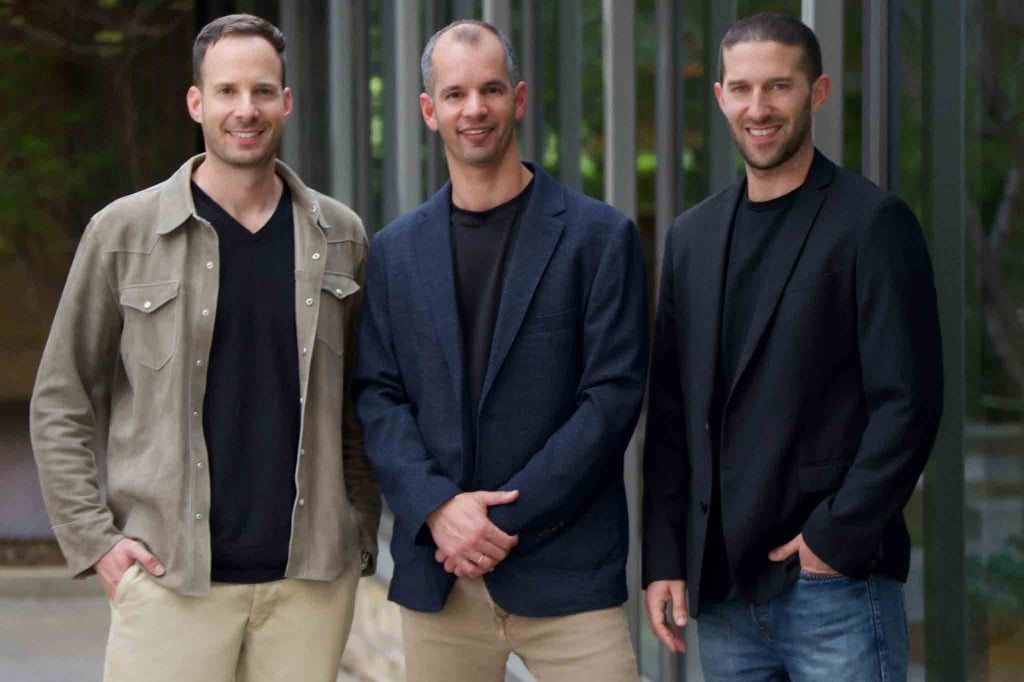
Roi Tiger sold his first company, Onavo, to Meta. On July 22, he and three co-founders launched Glow out of stealth with $180 million at a $1.2 billion valuation from Sequoia Capital, Cyberstarts, Greenoaks, and Redpoint Ventures.
Glow calls itself the Endpoint AI Company. The thesis is direct: the endpoint security market CrowdStrike, SentinelOne, and Microsoft dominate was built for a world where software behaved predictably. AI agents do not behave predictably. They install without review, chain tools across systems, and operate with valid credentials the existing tooling was never designed to distinguish from a human user.
The founding team is not new to this
Tiger spent nine years at Meta, most recently as vice president of engineering. CTO Omer Singer previously served as head of cybersecurity strategy at Snowflake. VP of R&D Ophir Arie was VP of R&D at Claroty and is a graduate of the Talpiot program and Unit 8200.
The leadership team also includes CPO Arnon Joseph, who led Meta Israel's product group as senior director of product, and COO Emily Heath, who previously served as CISO at United Airlines and DocuSign, sat on Wiz's board through its $32 billion acquisition by Google, and was a partner at Cyberstarts.
The venture backing reflects a bet on the team more than the product. Glow has raised $180 million across three rounds in roughly one year: a $20 million seed led by Sequoia and Cyberstarts, a $60 million Series A led by Index Ventures with Greenoaks at a $400 million valuation, and a $100 million round at the current $1.2 billion valuation. Index Ventures, Swish Ventures, Lux Capital, and Holly Ventures also participated.
The problem Glow is selling a fix for
Glow's core argument is that AI has fundamentally changed the endpoint, and the security industry has not caught up.
The data Glow cites: regular usage of AI tools on corporate devices has increased from 15% to 45% in one year. The average organization runs 12,000 unique pieces of software. 67% of it is invisible to existing security tools. 30% of AI agents operate with no guardrails.
The threat environment has shifted in parallel. Attackers now have access to increasingly advanced AI capabilities. The window between vulnerability discovery and exploitation has collapsed. The existing endpoint stack (EDR, SIEM, CASB) was architected around detection. Detect the breach, alert the SOC, contain it.
Glow's thesis is that detection is the wrong architecture for the AI era. By the time you detect an AI agent moving data with a VP's credentials at 3 a.m., the damage is done. The architecture Glow is selling is prevention: identify everything running on the endpoint, understand its risk in context of enterprise policy, and block it before it reaches sensitive systems.
What Glow ships
The platform delivers three capabilities. Asset Intelligence continuously discovers every endpoint and every layer of software, building a live inventory that stays accurate as the environment changes. Software Control applies adaptable policies with autonomous remediation: issues found, fixed, and prevented from returning at a scale manual processes cannot match. Safe AI Adoption eliminates shadow AI and ensures employees use enterprise tools with managed accounts and settings.
The enforcement model is architectural, not additive. Glow's agents do not pass alerts to a SOC queue. They make decisions within the guardrails security teams set and enforce them natively.
Glow uses AI models from Anthropic and Google Gemini through Amazon Bedrock, paired with its own software that provides the models with enterprise context and improves reliability for security tasks. Tiger told TechCrunch the platform has already prevented malicious npm packages from being installed in customer environments, identified AI agents attempting to pull in such software, and detected endpoints where EDR tools were missing or operating with reduced functionality.
The enterprise pattern
Glow has paying customers across healthcare, retail, and financial services. Typical deployments span tens of thousands of employee devices. The company employs nearly 100 people, about 70% in Israel and the remainder in the US.
The customer language is striking. "Glow has given us comfort that our controls are changing in a way that's meaningful so that we get to better prevention," said Larry Dolan, SVP and CISO at Fanatics. "Glow gives us an awareness of our shadow AI and is helping us safely adopt technology that gives me the confidence to release agentic coding tools and personal AI assistants into the hands of every person in the workforce," said Matthew Sharp, a three-time CISO.
At BMC Software, SVP and CIO Scott Crowder said: "By combining the endpoint as a control point with the power of AI, Glow is building a fundamentally new approach to reducing risk in modern environments."
The capital narrative
This is the second $100 million-plus endpoint security launch in three days. Neo, launched by former SentinelOne executives, raised $100 million from a16z and Bessemer on July 20. Glow launched with $180 million from Sequoia and Cyberstarts on July 22. Two different teams, two different architectures, but the same thesis driving both: the $40 billion endpoint security market needs a ground-up rewrite for AI, and the incumbents are not moving fast enough.
The pattern is not random. Enterprise security spending is already moving. The Gartner projection that 40% of enterprise applications will have agentic capabilities by end of 2026, up from 5% in 2025, means the companies that ship an agentic control layer now capture the compliance requirement that locks in over the next 6 months. The venture community is front-running the regulatory mandate.
The catch
Three things this launch does not settle.
First, Glow is competing in a market where the incumbents (CrowdStrike, Microsoft, SentinelOne, Palo Alto Networks) have installed bases measured in hundreds of thousands of endpoints and sales teams distributed across every major enterprise. Glow's prevention-first architecture is a different product philosophy, but the enterprise buying decision is not decided on architecture. It is decided on compliance coverage, integration surface, and the risk of betting on a startup versus the risk of staying with the incumbent.
Second, $180 million is a lot of capital to raise before publicly disclosing revenue metrics. The funding was structured as an all-equity round led by four firms, which signals conviction from the investors but also implies the company is not yet generating the recurring revenue that would qualify it for debt. Glow declined to disclose customer names and numbers.
Third, the AI-native endpoint security play is a category-creation bet, not a feature battle. Both Neo and Glow are selling the idea that AI requires a new architecture, not a new module on the old one. That is a harder sale than a feature comparison, because the buyer has to accept the premise before they evaluate the product. The window to establish that premise before the incumbents absorb it is measured in quarters.
← Previous
SentinelOne founders launch Neo with $100M to build the control layer for agentic software
Next →
Etched Raises $300M at $10.3B Valuation as Inference Hardware Goes From Skepticism to Sequoia's Biggest Series C
The Morning Recap
We sift the day. You make the calls.
The decision on every story, in your inbox before your first call.