OpenAI puts GPT-6 on Google Cloud. The only cloud hosting Gemini, Claude, and GPT together is now Google's
OpenAI and Google Cloud partnered to serve OpenAI's GPT-6 models through Google Cloud's Model Garden, making Google the only major cloud hosting Gemini, Claude, and GPT together.
The decision it puts on your desk
Re-quote your cloud inference contracts before the ends of renewals, now that GPT-6 lists inside Model Garden. If you run multi-cloud routing, price Model Garden against your current router stack by December 1, and keep one fallback endpoint outside Google, because the garden sets both the convenience and the dependency.
OpenAI put its models inside a rival's cloud on Wednesday, and the arrangement reframes what a cloud sells.
OpenAI and Google Cloud announced a partnership that brings GPT-6 Astra, GPT-6.1 Sol, and GPT-6 Luna into Google Cloud's Model Garden, per the announcements.
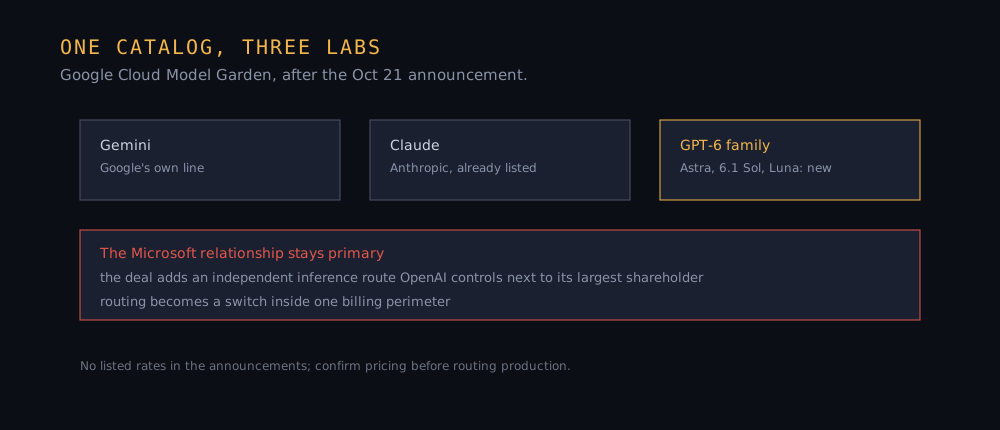
The setup: Google Cloud becomes the only major cloud that hosts Gemini, Anthropic's Claude, and OpenAI's GPT models in one place.
OpenAI's post about the partnership confirmed the arrangement on its own page, so this is OpenAI's own announcement rather than a leak.
Follow the money below the surface.
OpenAI's primary compute relationship still runs through Microsoft, and this deal does not replace it. What it changes: OpenAI gains an independent inference route that Microsoft cannot price around, which shifts OpenAI's leverage with its largest shareholder.
For buyers, Model Garden carries the routing offer. Model choice becomes a procurement switch inside one cloud billing perimeter rather than a multi-vendor construction project.
Ecosystem check: rivals read this as a move against lock-in.
Anthropic already sells into multiple clouds. OpenAI's exclusive route through Microsoft was the last major single-cloud holdout.
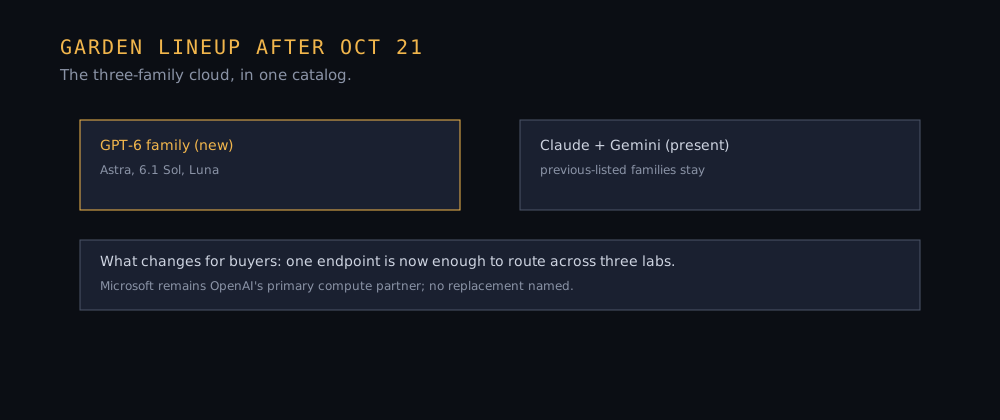
Precedent for the announce: Google's cloud business now spends margin carrying three model families in one catalog, and the pricing for that breadth will show up in the garden's rate cards.
Migration cost sits in the routing layer, not the models. Your existing policy rules can point at one identifier, and the multi-cloud comparison inside one console gets easier.
The unresolved edge is the commercial detail. The announcements name the models but no listed rates, so confirm pricing before you route any production workload to the new endpoint.
I get the sense the signal lands on people who bought model choice. Three labs inside one cloud bill now exists.
Source
← Previous
DHS orders federal agencies to remove DeepSeek. The government market just split from the open ecosystem
Next →
Meta's capex guide just broke the AI trade. The Nasdaq had its worst day in four months
The Morning Recap
We sift the day. You make the calls.
The decision on every story, in your inbox before your first call.