Modal raises $750M at $15.75B after crossing $1B in run rate. Serverless GPUs are the layer growing fastest
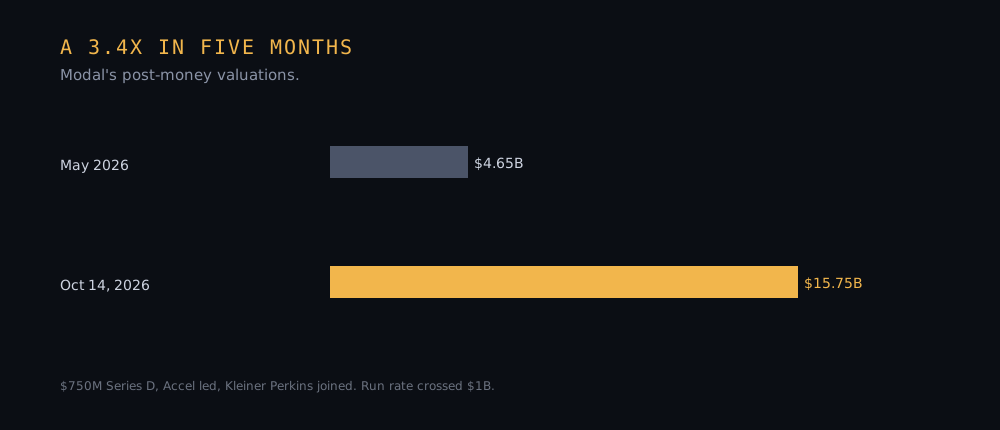
Modal raised a $750 million Series D at a $15.75 billion post-money valuation on October 14, led by Accel with Kleiner Perkins joining, after crossing $1 billion in annualized run rate.
The decision it puts on your desk
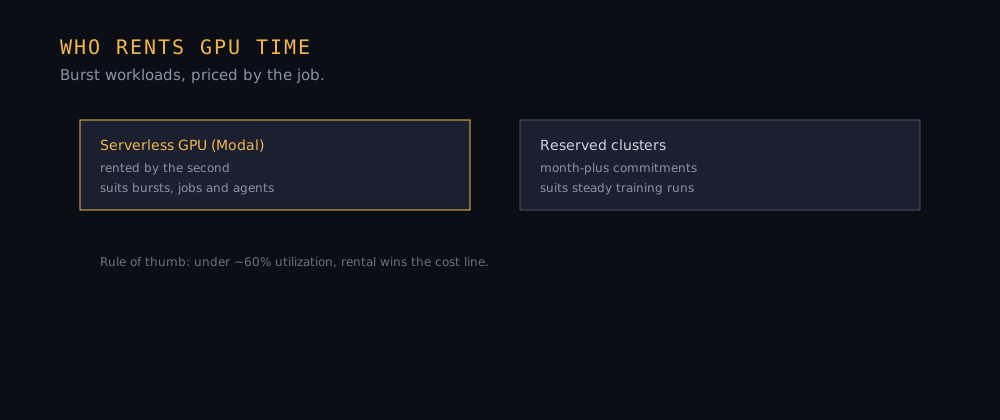
Re-price your burst compute needs by November 1. Any agent fleet that runs bursty inflow, cold starts, or short tools should be quoted both ways: reserved cluster versus serverless GPU. If your utilization sits under 60 percent, serverless is a cost posture, not a vendor choice.
The fastest-appreciating layer of the AI stack turned out to be the one nobody had profiled as an investment winner a year ago.
Modal raised a $750 million Series D on Tuesday at a $15.75 billion post-money valuation, led by Accel with Kleiner Perkins joining, the company announced.
The business reported the round alongside a milestone: annualized run rate crossed $1 billion, up from a $4.65 billion valuation in May, the round coverage said.
Compute unit economics: the layer prices time.
Modal sells serverless GPU compute (rented accelerators by the second rather than the month), which prices development workloads without reserved capacity. The spend case is per job, so an enterprise can start a workload without a capital committee.
What a 13.7-month triple says
Follow the money: a raise from $4.65 billion to $15.75 billion inside roughly five months triples the valuation before public markets price the layer.
Ecosystem check: Modal's position caught the market case. Agents that burst and die need GPUs by the second, not month-long reservations, and every enterprise that shipped an agent fleet this year created demand for exactly this class of infrastructure.
Precedent check: serverless GPU platforms were smaller acquisition targets a year ago. Today's round prices the same layer on the way up.
I get the sense the raise prices a market shift from owned clusters to rented capacity for burst work, and the funding set says the thesis is shared.
The unresolved edge is utilization. Serverless economics depend on keeping rented fleets busy, and the next quarterly report either shows the utilization rate holding up under published pricing, or it reprices the layer.
Source
← Previous
Google opens Gemini 4 Argon to everyone. The fall's most-watched gated release ends its Fairwind gate
Next →
Nvidia ships open Nemotron models that run on one GPU. The chip vendor just attacked cheap-and-cloud from below
The Morning Recap
We sift the day. You make the calls.
The decision on every story, in your inbox before your first call.