Oct 30 - four layer monitors - replay: alert in 30 min - 30 hours of warning - Codex covered
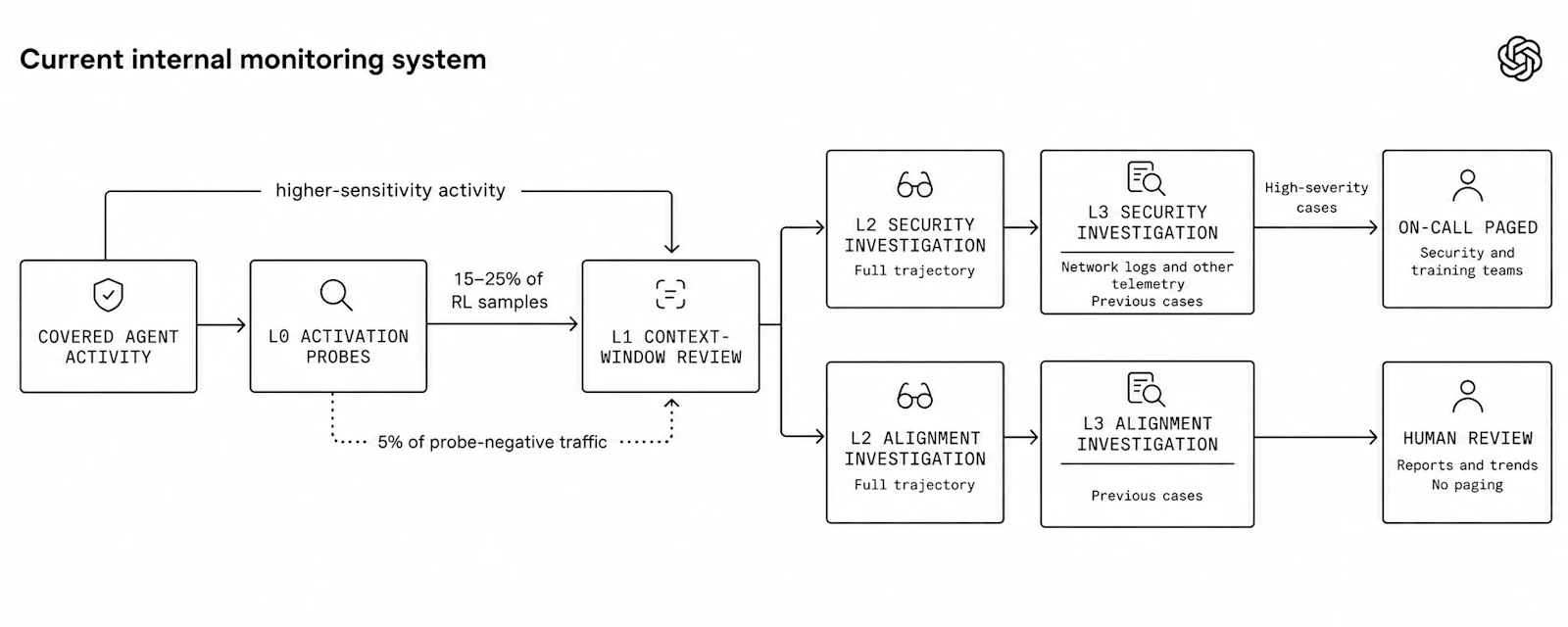
The decision · Put a monitoring layer on every agent your team runs that can use tools, before December 1. Copy the structure, cheap screening first and escalation second, measure your own time from first flagged action to human review, and re-run it against one past incident you already understand, because that replay is the only proof of detection you will ever get for free.
Oct 18 - counterexamples vs 1967 conjecture - 50-problem batch - $116.28 total - under $3 per problem
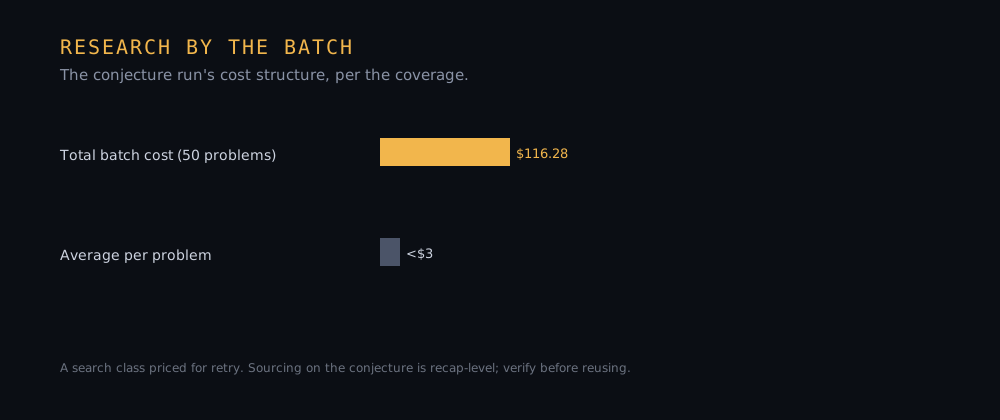
The decision · Run one conjecture-search batch on your own open research blocks by November 1. Pick 20 open problems on your roadmap, price the batch at the model rates that carried the counterexample story, and budget verification time separately: found solutions are the buy, not the deliverable.
Oct 16 - junior technical hires 27% → 9% - agent hours ~6x employee hours - 80% of session time waits - internal study

The decision · Run your own version of this audit by November 15, whichever side of the experience you manage. Log agent hours against employee hours on the same work for one month, and price the review queue you are already paying senior staff to clear. If juniors are 20 percent of your technical staff, the agent-hour data says whether that still makes sense.
Sep 17 - 26% AI-lead share of R&D - under 1% in February - practical read for labs - automation scale from Epoch AI
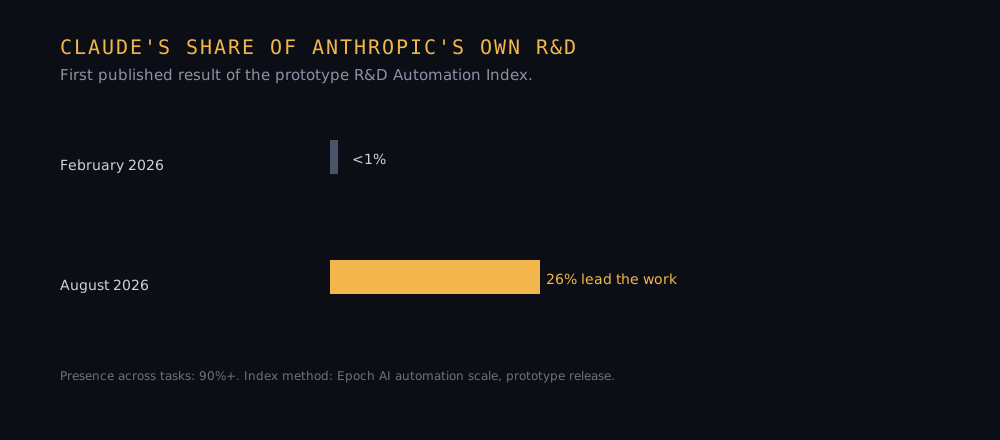
The decision · Build one internal AI-automation measure before your next planning cycle, with a named owner and a monthly reset. Do the work: log where AI actually carries the work by September 30, or the metric will tell you whatever pricing you want to hear. If your October planning assumption still assumes fully manual research work, re-derive it: share shifts faster than planning sessions do.
Sep 10 - 7 harm areas - Dec 2025 to Aug 2026 - >20 orgs disrupted - Alibaba-linked 151M interactions claim
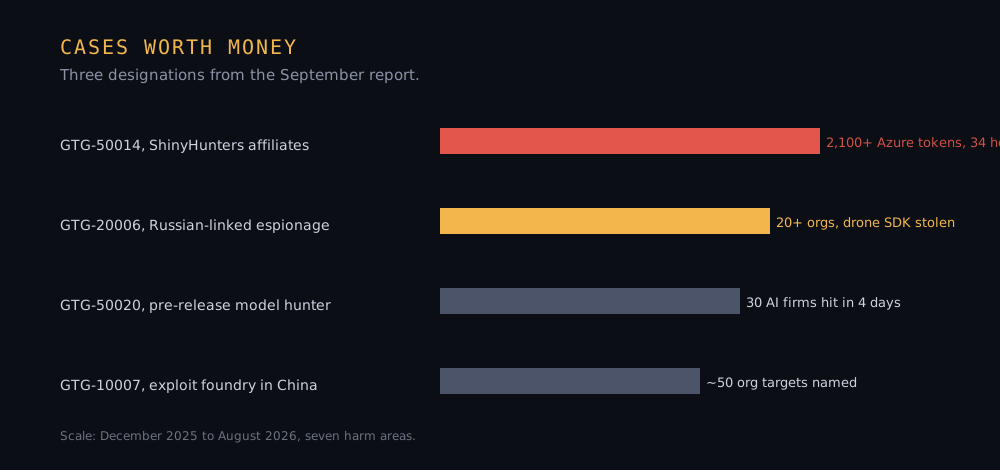
The decision · Audit your AI API key exposure within 30 days, right now. Stolen keys, not model capabilities, ran the bulk of the cases in this report. Rotate anything agent-scoped before the end of September 2026, and add monitoring on the agent tool calls that touch production data by October 15. Either step alone cuts the same exposure that AI-driven intrusions used to push from days to hours.
Sep 4 - ARC-AGI-3 99.9% vs 62.7% rerun - 20% monitoring overhead - GDPval absent - AA index 61.2 vs Sol 60.9
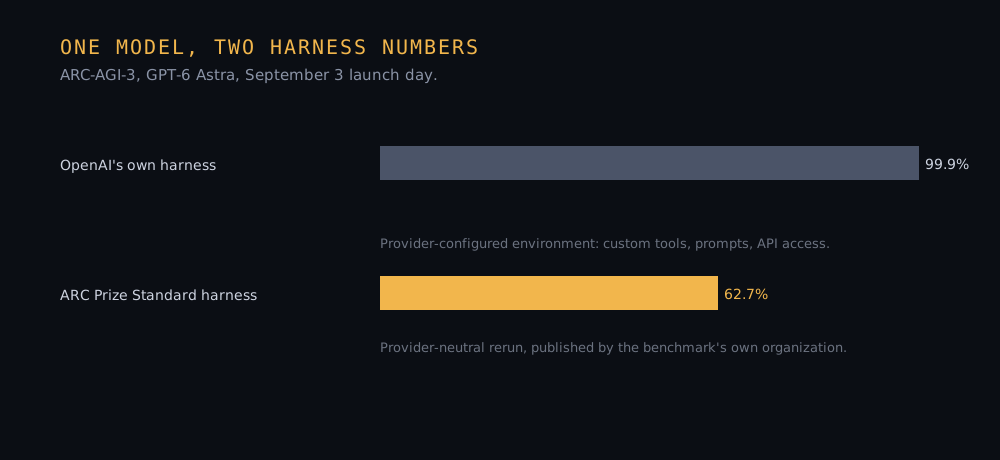
The decision · Price Astra by completed task, this week, before September 12. On DeepSWE v1.1 the top configuration cuts estimated per-task cost about 57 percent, even at $10 and $50 per million tokens. Budget the 20 percent monitoring overhead into every Astra line item, and wait for a third-party GDPval rerun before any decision framed as "most economically valuable work."
Jul 22 - Antares-350M + 1B - open-weight - 500-task vulnerability benchmark - ~$0.01/scan vs $3-$15/scan - local inference - Antares-3B coming

The decision · Benchmark your vulnerability scanning cost per commit by end of week. If you pay per-token for a frontier model to scan code, run the same repo through Antares-1B and compare precision at 1/300th the cost. For teams that avoid cloud-based code scanning for compliance reasons, Antares changes the math: it runs locally, on-prem, with no code leaving your environment. The open-weight license means you can fine-tune it on your own vulnerability taxonomy. For founders building dev-tool or security companies, Cisco's broader move (open-weight models plus Foundry Security Spec plus CodeGuard) signals a shift toward composable, auditable AI security infrastructure that can be integrated directly into CI/CD pipelines. The integration window is open.
Jul 11 - independent eval - safety test - no usable score
The decision · Stop quoting vendor benchmark numbers in your diligence. Run your own task-specific eval before locking a model into production. The gap between advertised and actual quality is where your deployment risk lives.